
The Robots Stopped Being a Car Story
At the end of October the North American automation trade association published its third quarter figures. Just under eleven thousand robots were ordered, worth about seven hundred and twenty million dollars, up roughly a quarter on the same quarter last year in both units and value.
At the end of October the North American automation trade association published its third quarter figures. Just under eleven thousand robots were ordered, worth about seven hundred and twenty million dollars, up roughly a quarter on the same quarter last year in both units and value. It was the strongest quarter of the year.
The composition matters more than the total. Semiconductor and electronics orders nearly doubled. Plastics and rubber rose by about two thirds. Life sciences and pharmaceuticals rose by close to two fifths, metals by rather more than a third. Automotive original equipment orders returned to growth after a weak first half, but remain well below where they were a year ago across the nine months.
From the Battlefield to the Balance Sheet
For four decades the North American robot market was a proxy for the car industry. If Detroit was retooling, orders rose. If it was not, they fell. Reading the automation numbers meant reading the automotive cycle, and almost nothing else.
That relationship has broken, and this quarter is the clearest evidence yet. Automotive original equipment, the traditional engine of the series, is still down on the year across nine months. The quarter was strong anyway, carried by semiconductors, electronics, pharmaceuticals and metals. The market found other customers.
This is what the reshoring build out actually looks like in operating data rather than in announcements. Factory construction spending has been reported for three years. Construction is not production, and a building is not capacity. Robots are the step after the building, which makes a robot order a far better signal that a facility intends to run than a groundbreaking ever was.
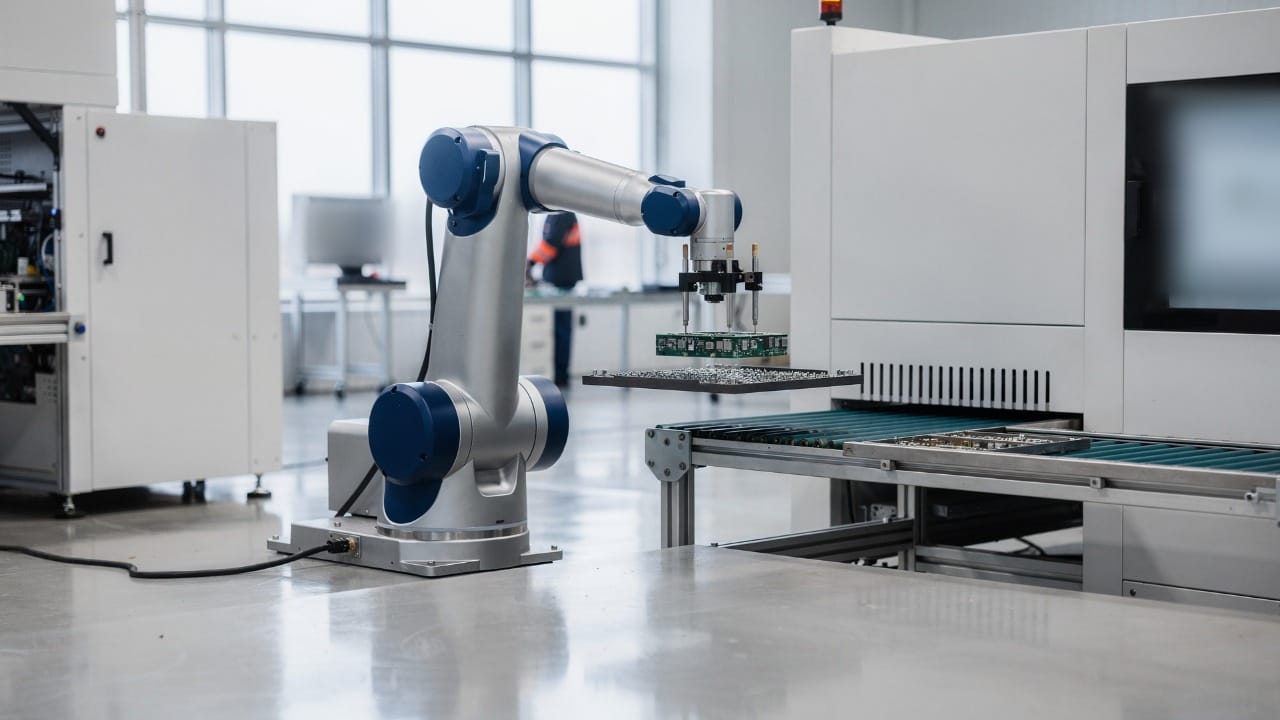
The collaborative robot numbers point the same way. Those units, which work alongside people rather than behind fencing, were about one unit in six ordered in the quarter and rose by more than half. Their heaviest concentrations are in life sciences and in semiconductors and electronics. That is automation entering places that never had a caged robot line at all.
The Dual-Use Reality Check
None of this is a defense story, and that is exactly why it is worth reading. The capacity being installed is commercial, and defense will draw on it the way it draws on every other commercial industrial base: at the margin, through suppliers who serve both.
The two fastest growing categories are the ones that matter most for anything this newsletter covers. Semiconductor and electronics automation is the capacity behind domestic chip and sensor production. Metals automation is welding, machining and fabrication, which is the same shop floor that makes munitions components, vehicle structures and shipbuilding parts.
There is a caveat worth keeping. Robot orders are a leading indicator of intent, not a measure of output. An order placed now installs next year and reaches rate the year after, and some of these orders will be cancelled or deferred if input costs and trade conditions worsen. The association itself flags higher input costs and trade uncertainty as factors to watch, which is a reasonable thing to say when the ninth consecutive month of manufacturing expansion is also a month of modest industrial output growth.
The Capital Signal
The capital signal is that automation demand has broadened out of its historical dependence on one industry, and that the breadth is better news than the growth rate. A market carried by four or five sectors is far more durable than one carried by vehicle retooling cycles.
The structural read is to use robot orders by sector as the operating counterpart to the construction spending numbers that dominate the reshoring conversation. Construction tells you money was committed. Robot orders by industry tell you which of those commitments are being fitted out to actually produce. Watch the food and consumer goods line, which fell sharply this quarter and is the segment most exposed to ordinary consumer demand, because a broad automation cycle that is strong in capital goods and weak in consumer goods is describing an economy building capacity faster than its households are buying output. That gap is where overcapacity eventually shows up.
Signal: Robot orders have stopped tracking the car industry and started tracking the reshoring build out, which makes them the best operating evidence we have that the new factories intend to run.
Marcus Cole, Top Margin

The Power Queue Now Has a Price
On the same day at the end of October, two things were said about gas turbines. The American manufacturer reported quarterly results

The Army Is Asking What Rate Costs
In the last week of October the Army published a market survey asking industry whether it could build and support a little
The Seabed Just Got a Permit Office
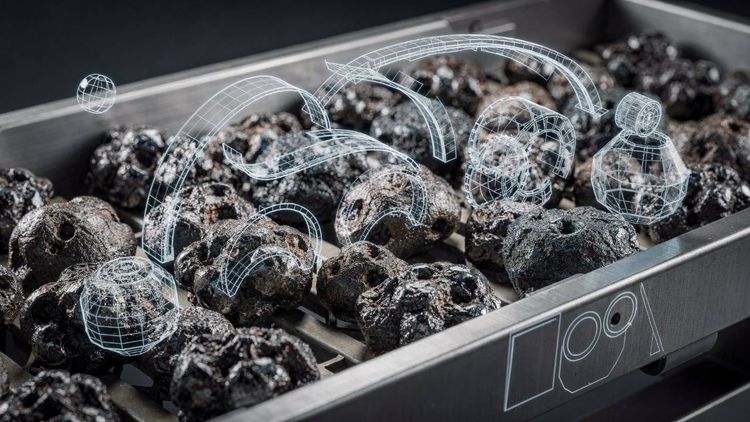
In the third week of October the American oceans agency certified two deep sea mineral exploration licence applications filed by subsidiaries of

The Part Is the File Now
In the middle of October a Michigan industry organisation received a seven and a half million dollar task order to design and
Join The Strategic Reserve
Get encrypted weekly intelligence. No noise, just mission-critical data