
The Power Queue Now Has a Price
On the same day at the end of October, two things were said about gas turbines. The American manufacturer reported quarterly results showing a backlog near two hundred billion dollars, gas equipment orders up roughly fourfold on the year, and full year order pricing per kilowatt
On the same day at the end of October, two things were said about gas turbines. The American manufacturer reported quarterly results showing a backlog near two hundred billion dollars, gas equipment orders up roughly fourfold on the year, and full year order pricing per kilowatt running about half again above last year's. It said it had sold delivery slots for 2032.
The Asia Pacific head of the Japanese manufacturer, speaking to reporters in Singapore, put it more plainly. New customers are looking at delivery around 2031. Slots for 2028 and 2029 are close to full.
From the Battlefield to the Balance Sheet
A six year wait for a machine that generates electricity is not a supply chain story. It is a repricing of time, and it has consequences well beyond the people buying turbines.
Consider what the queue does to everything downstream. Any project that needs firm power on a defined date now has to secure the generation before it secures anything else, because the turbine is the longest lead item in the whole build. That inverts the normal sequence, in which power is arranged once the plant or the data centre is designed. The slot reservation has become the first commitment rather than the last.
It also sorts buyers by balance sheet rather than by need. A reservation years ahead of delivery requires capital that earns nothing until the machine arrives, which favours the largest and best funded buyers. The hyperscale technology firms can do that comfortably. A utility serving a mid sized city, or an industrial developer building a factory, competes for the same slots on much worse terms.
The price signal confirms it. Order pricing per kilowatt up by roughly half in a year is not inflation in steel and labour. It is scarcity rent on a delivery date, and the manufacturers are collecting it because the queue lets them.
Capacity is being added, but slowly and deliberately. The manufacturers have been clear for two years that they will not build factories against a demand curve they think may be cyclical, and they would rather sell a smaller number of units at much better prices. That is a rational choice for them and a structural problem for everyone else.
The Dual-Use Reality Check
This is the most quietly consequential constraint in the reshoring story, and it has almost nothing to do with defense. Every reshored plant, every new fab, every refinery, every magnet facility and every ammunition line this newsletter has covered requires firm electricity at a date certain. So does every data centre. They are all drawing on the same small group of suppliers.
The defense angle is indirect and real. Munitions plants, shipyards and depots are large industrial electrical loads, and installations increasingly want generation they control rather than generation they hope the grid delivers. A programme that assumes new on site power in 2029 is competing for a slot against a technology company that reserved its position in 2026 and can pay more.
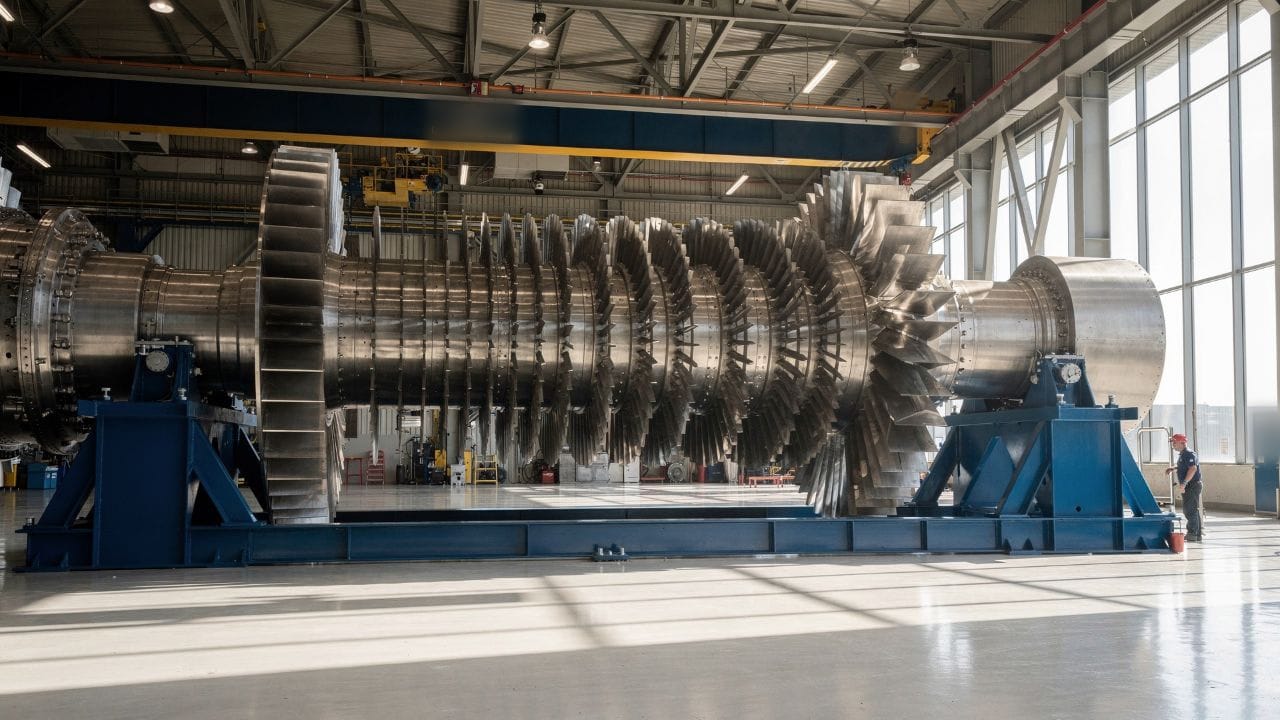
Underneath sits the familiar bottleneck. The hard parts of a large turbine are big castings and forgings, including single crystal blades, from a very short list of suppliers who also serve aerospace. Adding turbine output and adding jet engine output pull on the same furnaces.
The Capital Signal
The capital signal is that firm generating capacity has become a scheduled, priced and allocated commodity, and the right to a delivery date is now an asset in its own right.
The structural read is to treat power as the first question in any industrial project rather than the last. When you see an announcement for a factory, a fab or a data centre with a date attached, ask whether the generation is contracted, reserved or merely assumed, because the gap between those three is now measured in years. Watch whether the turbine makers finally commit to large capacity expansion, since that decision would mark the point at which they believe this demand is structural rather than a cycle, and it would eventually relieve the queue. Until then the winners are the suppliers of the long lead components, who face the same demand with far less public scrutiny, and the buyers who reserved early and can now sell or sublet a position they no longer need.
Signal: A delivery slot for a gas turbine is now a tradable asset, and any project that has not reserved one is further from operating than its schedule says.
Marcus Cole, Top Margin

The Robots Stopped Being a Car Story
At the end of October the North American automation trade association published its third quarter figures. Just under eleven thousand robots were
The Army Is Asking What Rate Costs
In the last week of October the Army published a market survey asking industry whether it could build and support a little

The Seabed Just Got a Permit Office
In the third week of October the American oceans agency certified two deep sea mineral exploration licence applications filed by subsidiaries of

The Part Is the File Now
In the middle of October a Michigan industry organisation received a seven and a half million dollar task order to design and
Join The Strategic Reserve
Get encrypted weekly intelligence. No noise, just mission-critical data