
The Part Is the File Now
In the middle of October a Michigan industry organisation received a seven and a half million dollar task order to design and validate a secure digital manufacturing environment for the Army. The job is to build an encrypted pipeline that can send intellectual property protected manufacturing
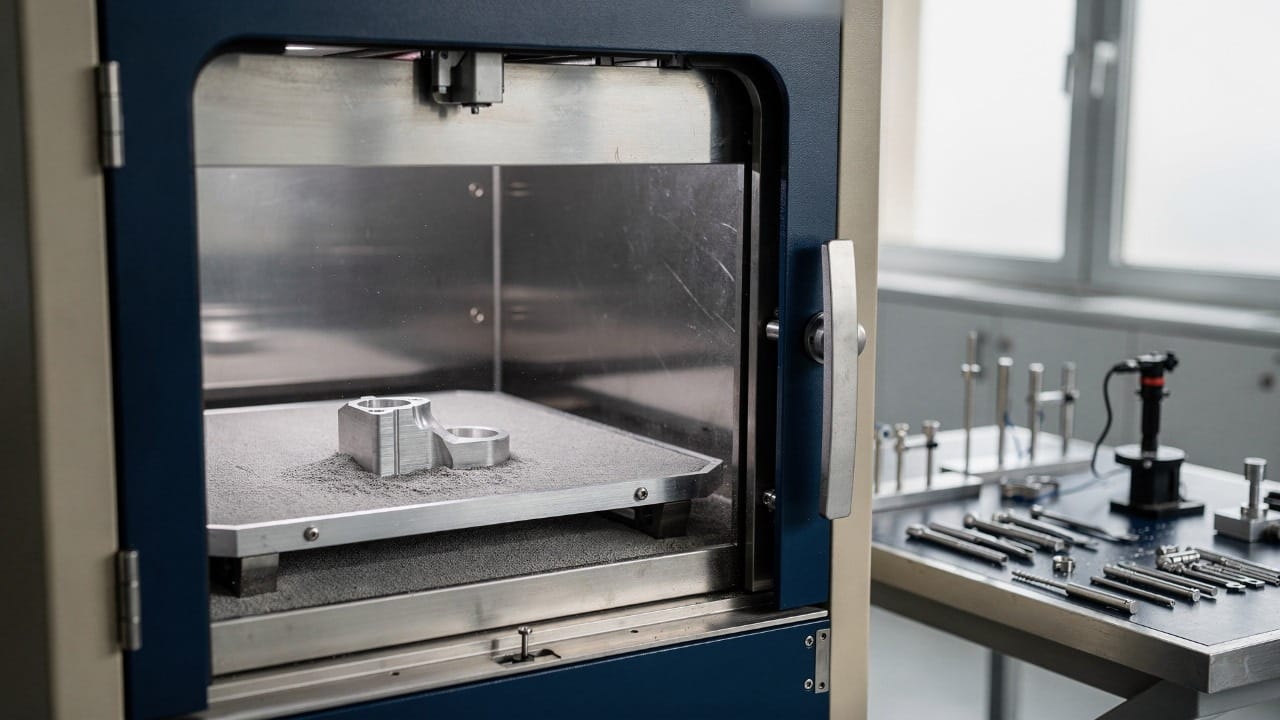
In the middle of October a Michigan industry organisation received a seven and a half million dollar task order to design and validate a secure digital manufacturing environment for the Army. The job is to build an encrypted pipeline that can send intellectual property protected manufacturing instructions to a network of distributed additive manufacturing machines, identify candidate polymer and metallic weapon system components, produce them, and demonstrate that the recipe moved securely with its quality assurance attached.
The organisation describes the model as streaming manufacturing, by analogy with how digital media is licensed and delivered. It is a first phase under an industrial base sustainment programme, with partners in printing hardware and applied research. No timeline, part volumes or site count were given.
From the Battlefield to the Balance Sheet
Seven and a half million dollars is a small number attached to a large idea, and the idea is worth more attention than the award. The sustainment problem across every long lived military system is the same: the platform outlives its supply chain. The vendor that made a bracket, a housing or a pump impeller thirty years ago has been bought, has closed, or has thrown away the tooling, and the part is now sourced by a slow and expensive one off order.
Printing the part is not the hard bit. The hard bit is proving that a part printed in a different building on a different machine is the same part, and doing it without handing the design to everyone who touches the file. Those two problems, qualification and control of the design, are what have kept distributed additive manufacturing in pilot programmes for a decade.
What this contract is buying is the plumbing for both. If it works, the economics of spare parts invert. Today the value sits in holding inventory and in owning the tooling. In this model the value sits in owning the qualified recipe, which is a licence rather than a warehouse, and which earns every time it is executed.
That turns a capital intensive, low margin parts business into something closer to software licensing, with the attendant question of who captures the margin. The government, which paid for most of these designs, has historically not owned the data rights to them.
The Dual-Use Reality Check
This is a commercial problem with a defense budget attached. Every industrial operator with installed equipment faces the same obsolete parts issue: mining, rail, utilities, oil and gas, shipping and heavy process plants all carry enormous spares inventories against suppliers that may not exist when needed.
The piece that is genuinely hard, and genuinely valuable, is the quality assurance recipe travelling with the design. A secure, auditable chain that proves a part was made to specification on a certified machine is the thing standing between distributed manufacturing and regulated industries. Aviation maintenance, nuclear, medical devices and pressure equipment all need exactly that, and none of them will accept a printed part without it.
If a defense programme pays to build that chain and prove it against the hardest security requirements, the commercial versions follow at lower cost. That has been the pattern in cryptography, in navigation and in secure communications, and there is no obvious reason it breaks here.
The Capital Signal
The capital signal is that the asset in distributed manufacturing is not the printer. It is the qualified recipe and the certification chain around it, and whoever owns those collects a fee on every part without owning a factory.
The structural read is to ask who holds the data rights wherever this model appears. A programme that builds a secure distribution network while the designs remain the property of the original manufacturers has built a toll road for somebody else. Watch whether the phase one option gets exercised and whether the candidate parts chosen are real sustainment items rather than easy demonstrations, because the selection tells you whether the programme intends to be used. Watch too for the machine makers, since a printer that can be certified and audited remotely is a different product from one that merely prints, and that capability will be worth more than print speed.
Signal: In distributed manufacturing the money is in owning the qualified recipe, not the machine, and the contracts being written now decide who owns it.
Marcus Cole, Top Margin
Someone Else Is Funding Your Copper Mine
In the third week of October a Canadian miner and a Japanese trading house took a final investment decision on a copper
The Battery Found a Better Customer Than the Car
In the third week of October a solid state battery developer announced plans for a hundred megawatt hour cell production line, targeting

The Startup Moved Into the Prime's Factory
In the middle of October a major missile maker announced a three hundred million dollar expansion of its Texas plant, part of
The Chipmaker Became the Refiner's Banker
In the third week of October one of the three large memory manufacturers said it would put strategic funding into a materials
Join The Strategic Reserve
Get encrypted weekly intelligence. No noise, just mission-critical data