
The Startup Moved Into the Prime's Factory
In the middle of October a major missile maker announced a three hundred million dollar expansion of its Texas plant, part of a programme of eight to nine billion dollars across more than twenty American facilities through the end of the decade. The site grows past
In the middle of October a major missile maker announced a three hundred million dollar expansion of its Texas plant, part of a programme of eight to nine billion dollars across more than twenty American facilities through the end of the decade. The site grows past seven hundred and thirty five thousand square feet, with six thousand new jobs nationally and two thousand in Texas, supporting interceptor and precision strike production.
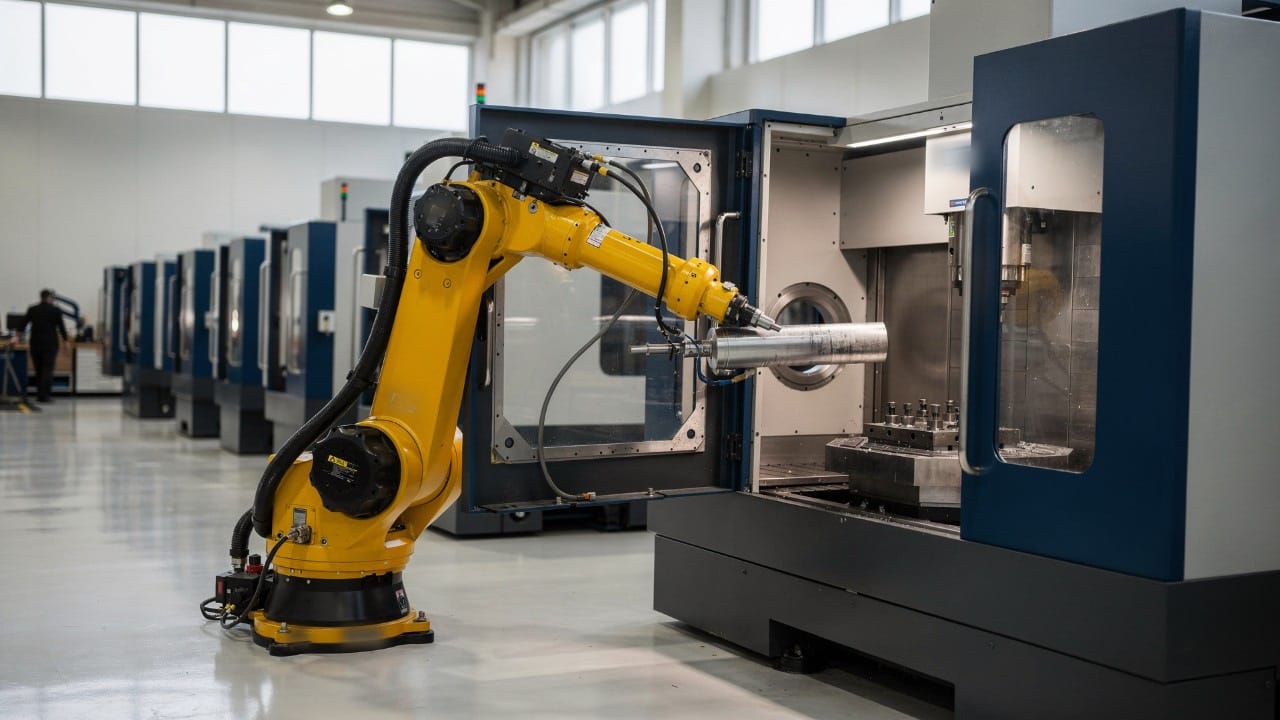
Buried in the same announcement is the more interesting item. An automated machining company, founded a few years ago and better known for building its own factories, will install a twenty four machine automated cell inside the prime's plant, operational in early 2027, under a seven year agreement.
From the Battlefield to the Balance Sheet
For two years the story in defense capital has been the challenger displacing the incumbent. This is a different transaction, and a more durable one. The challenger is not taking the programme. It is selling production capability to the company that holds the programme, and installing it on the incumbent's floor.
The reason is the constraint. A missile plant that made a quarter of a million parts last year and expects close to a hundred new advanced machines this year is not short of machines or of demand. It is short of the people who can set up, program and run those machines to aerospace tolerances, and that shortage does not respond to capital spending on any useful timescale. An automated cell that runs around the clock with a thin crew is a way of converting a labour constraint into a capital expenditure, which is the one conversion a prime can actually execute.
That is also why the deal is seven years rather than a purchase order. Automation of this kind is not a product you buy and bolt down. It is a process capability that has to be qualified part by part, and qualification is where the time and the money actually go. A seven year term is roughly the horizon over which that qualification pays back.
For the challenger, the economics are better than winning a programme. It gets utilisation without building and financing a building, and it gets its software and its methods embedded inside a customer that is very hard to displace once the parts are qualified to it.
The Dual-Use Reality Check
Automated machining is dual-use in the most literal sense, because it is the same machine, the same software and the same operators. The cells going into a missile plant are the cells that serve commercial aerospace, energy equipment, medical devices and heavy industry, and the bottleneck they address is identical everywhere: a shrinking pool of skilled machinists against a growing pool of parts that need cutting.
That is why this model travels. A company that proves it can run lights out machining to aerospace qualification standards inside a defense plant has demonstrated the hardest version of the problem, and the commercial version is easier and much larger. The defense contract is the proving ground and the reference customer, not the market.
The honest caveat is that automated machining has been promised before and has repeatedly failed on the unglamorous parts: fixturing, tool wear, inspection and the handling of parts between operations. Nothing about a twenty four machine cell guarantees it works at rate.
The Capital Signal
The capital signal is that the venture defense thesis is maturing from displacement into supply. The money is not only flowing to companies trying to win programmes away from primes. It is flowing to companies selling the primes the capability they cannot build internally, which is a lower risk business with a far shorter sales cycle.
The structural read is to watch where new entrants position themselves relative to the incumbent. A company selling a weapon competes with the prime and waits for a programme of record. A company selling production capability sells to the prime and gets paid during the build out. In a period when every munitions line is being told to double or triple, the second position is the better one. Watch for the commissioning date to hold, because early 2027 is a real test, and watch whether the parts coming off the cell actually get qualified to the interceptor programmes rather than to easier work. That qualification, not the machine count, is the asset.
Signal: The most valuable thing a defense startup can sell right now is not a weapon but the ability to make parts, and the prime is the customer.
Marcus Cole, Top Margin

The Battery Found a Better Customer Than the Car
In the third week of October a solid state battery developer announced plans for a hundred megawatt hour cell production line, targeting
The Chipmaker Became the Refiner's Banker
In the third week of October one of the three large memory manufacturers said it would put strategic funding into a materials

The Ten Year Order Buys Certainty, Not Jets
In late October the Pentagon and the prime contractor behind the F-35 agreed on a framework covering at least eight hundred
China Is Selling Access, Not Metal
Two things happened to rare earth supply in the second week of October. European and Chinese trade officials met in Beijing and
Join The Strategic Reserve
Get encrypted weekly intelligence. No noise, just mission-critical data