
Someone Else Is Funding Your Copper Mine
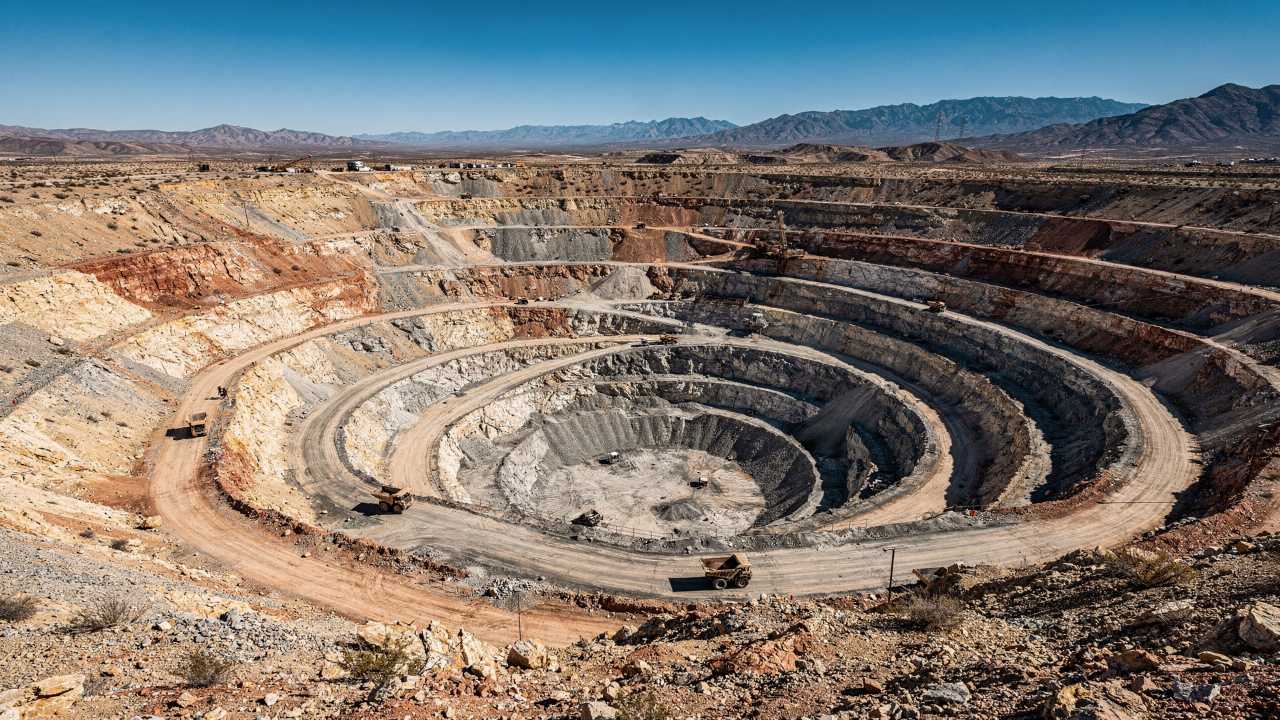
In the third week of October a Canadian miner and a Japanese trading house took a final investment decision on a copper project in southern Arizona. Initial growth capital is a bit over two billion dollars, first production is targeted for the second half of 2029,
In the third week of October a Canadian miner and a Japanese trading house took a final investment decision on a copper project in southern Arizona. Initial growth capital is a bit over two billion dollars, first production is targeted for the second half of 2029, and the base case runs at roughly a hundred thousand tonnes of copper a year over the first decade, rising after a concentrator expansion.
The ownership is the part worth sitting with. The miner holds seventy percent and the trading house thirty, having put in six hundred million dollars of initial equity with the option to contribute several hundred million more. The operator's own contribution is expected to be around five hundred million, with its first payment deferred to 2028.
From the Battlefield to the Balance Sheet
Copper is the input that every reshoring plan quietly assumes and almost nobody budgets. It is in the grid connection, the transformer, the motor, the wiring harness, the shipyard, the data centre and the munitions plant. A country can reshore chips, magnets and propellant and still find that the limiting factor on building any of it is a metal priced on a global market with a structural deficit forming.
What this transaction shows is who is willing to fund the answer. The project was permitted, engineered and ready, and the equity still came substantially from a foreign trading house rather than from American capital markets or an American industrial buyer. That is not a scandal. It is the normal structure of mine finance, and it reflects a difference in how two financial cultures price a fifteen year asset with a four year build.
Japanese trading houses have underwritten raw material supply for Japanese industry for a century, and they will accept a return profile that an American generalist fund will not. The result is that strategic ownership of domestic resource capacity accrues to whoever is prepared to wait, and patience is the scarce input.
The timeline is the other lesson. The decision is made now and the metal arrives in late 2029, after which it takes most of a decade to reach full rate. Nothing about tariffs, executive orders or a change in demand moves that forward.
The Dual-Use Reality Check
There is nothing military about a copper mine, which is exactly the point. Copper is the most completely civil input in any defense supply chain, and the defense share of consumption is small enough that it will never justify a mine on its own. The demand doing the work here is electrical infrastructure, construction, vehicles and data centres.
That is a favourable asymmetry for once. Defense gets to be a passenger on a commercial build out, the same way it does in advanced packaging and in power electronics. The capacity exists because industry needs it, and the military requirement is absorbed at the margin.
It also means the defense framing has limited power to accelerate anything. The company's own view is that the United States is expected to remain a copper metal importer through this period, which is a sober statement from a party with every incentive to say otherwise. One large new mine does not change an import position. It reduces the rate at which it worsens.
The Capital Signal
The capital signal is that domestic resource capacity is being financed by strategic foreign industrial capital rather than by domestic investors, and that ownership structure is the price of getting the asset built at all.
The structural read is to stop treating permits as the finish line. This project had its state and local approvals and still needed an investment decision, a partner and a deferral structure before a shovel moved, and the extension case that nearly triples the mine life still depends on federal permits that have not been granted. Watch which projects convert approval into a funded decision, because that conversion is where most of the announced pipeline dies. Watch also the smelting and refining step, since concentrate shipped abroad for processing is not domestic supply in any sense that matters, and the facilities that close that loop onshore are rarer and harder to permit than the mines themselves.
Signal: America's next large copper mine is funded and three years out, and a foreign trading house owns nearly a third of it because it was willing to wait.
Marcus Cole, Top Margin
The Battery Found a Better Customer Than the Car
In the third week of October a solid state battery developer announced plans for a hundred megawatt hour cell production line, targeting

The Startup Moved Into the Prime's Factory
In the middle of October a major missile maker announced a three hundred million dollar expansion of its Texas plant, part of

The Chipmaker Became the Refiner's Banker
In the third week of October one of the three large memory manufacturers said it would put strategic funding into a materials

The Ten Year Order Buys Certainty, Not Jets
In late October the Pentagon and the prime contractor behind the F-35 agreed on a framework covering at least eight hundred
Join The Strategic Reserve
Get encrypted weekly intelligence. No noise, just mission-critical data