
The Battery Found a Better Customer Than the Car
In the third week of October a solid state battery developer announced plans for a hundred megawatt hour cell production line, targeting the start of cell production in 2028. The notable part is the market list. The company named artificial intelligence data centres, aerospace and defense.
In the third week of October a solid state battery developer announced plans for a hundred megawatt hour cell production line, targeting the start of cell production in 2028. The notable part is the market list. The company named artificial intelligence data centres, aerospace and defense. Automotive, the market the technology was built for and funded against for more than a decade, did not appear on it.
The line follows a pilot facility in California and an equipment partnership with a German automation firm that has been working on the move from pilot processes to mass production. No capital cost, financing or site was disclosed.
From the Battlefield to the Balance Sheet
This is what a technology looks like when it finds the customer who will actually pay for its advantage. Solid state lithium metal cells offer more energy per unit of weight and volume, faster charging and better behaviour under thermal stress. In a passenger car those are nice to have, and they compete against a cell that is already cheap, already manufactured at enormous scale and improving every year. The advantage is real and the price premium is very hard to collect.
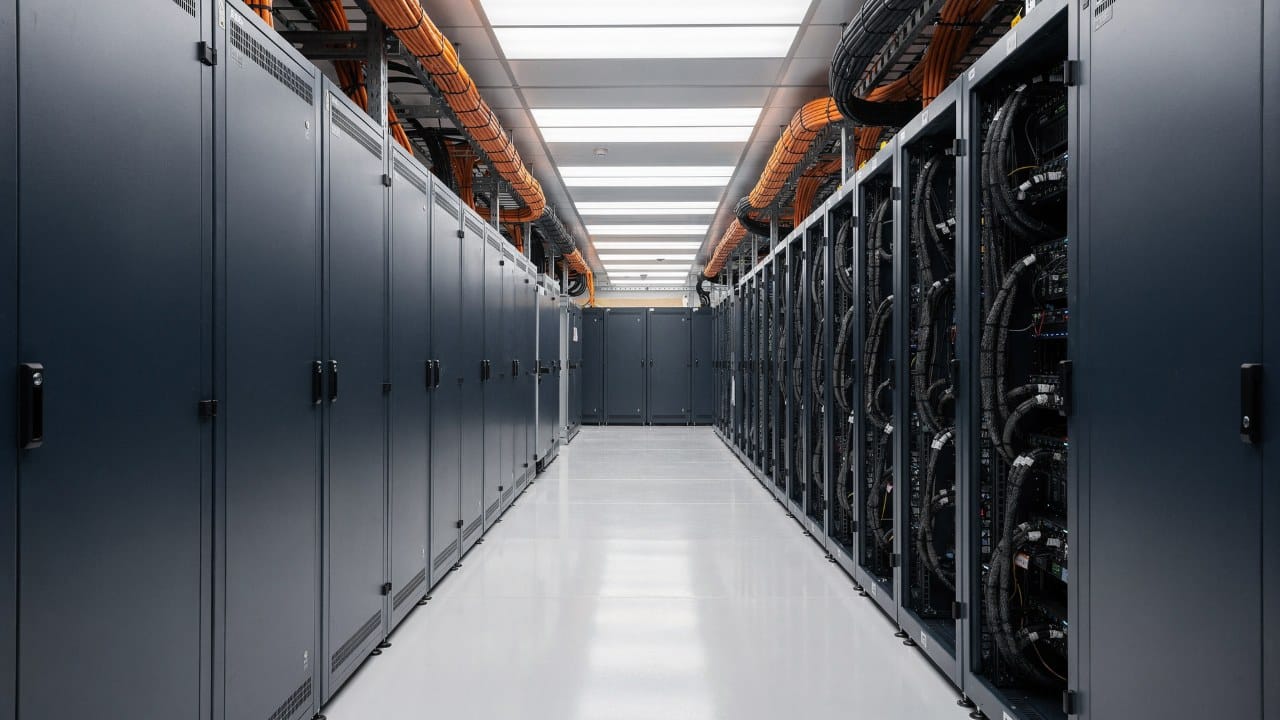
In a data centre, an aircraft or a soldier's load, the same advantage is worth a great deal more. Weight and volume carry a direct cost. In an uninterruptible power installation, the floor space a battery occupies is floor space that could hold revenue generating compute, and the thermal risk of a cell failure sits next to equipment worth more than the building. Those customers will pay a premium per kilowatt hour that a car buyer will not.
So the first production line goes where the margin is, not where the volume is. That is the correct order of operations for an expensive new process, and it is the opposite of the plan almost every advanced cell company announced five years ago.
The scale tells you the same thing. A hundred megawatt hours is a rounding error against automotive cell plants measured in tens of gigawatt hours. It is a meaningful quantity for backup power, aviation and defense.
The Dual-Use Reality Check
The usual direction in this newsletter is military technology commercialising outward. This runs the other way, and it is becoming the more common pattern in energy hardware. The capital came from the automotive thesis, the manufacturing partner comes from industrial automation, and defense is arriving as an early high value customer rather than as the funder.
That matters for the supply chain underneath. Cells serving data centres and aviation need the same lithium, the same separators, the same dry rooms and the same cell assembly equipment as cells serving vehicles, and almost all of that equipment base and materials base sits in Asia. A domestic line producing premium cells for defense does not by itself domesticate any of it.
The genuinely dual-use part is the power electronics and thermal engineering around the cell, which is shared across data centres, electric aircraft, directed energy systems and vehicle electrification. That is where a durable domestic supplier position is most likely to form, and it attracts far less attention than the cell chemistry.
The Capital Signal
The capital signal is that data centre power has become a destination market for advanced hardware that could not clear automotive economics, and defense is riding alongside it as a second premium buyer. Expect more companies to re aim existing technology at that pair, because the demand is immediate and the price sensitivity is low.
The structural read is to treat a 2028 production start as a plan rather than a capability, and to watch the equipment order rather than the announcement. Cell manufacturing fails at scale up far more often than it fails in the laboratory, and the step from a pilot line to a hundred megawatt hours is where most of these programmes have historically stalled. Ask three questions of any such claim. Is there a signed offtake or only a named market. Is the equipment ordered or only designed. And what is the yield on the pilot line today. Watch too for whether defense shows up as a qualified programme rather than as a word in a press release, because qualification is the expensive part and nobody announces it.
Signal: Advanced batteries are finding their first real market in data centres and defense rather than in cars, because those are the customers who pay for energy density.
Marcus Cole, Top Margin

The Startup Moved Into the Prime's Factory
In the middle of October a major missile maker announced a three hundred million dollar expansion of its Texas plant, part of
The Chipmaker Became the Refiner's Banker
In the third week of October one of the three large memory manufacturers said it would put strategic funding into a materials
The Ten Year Order Buys Certainty, Not Jets
In late October the Pentagon and the prime contractor behind the F-35 agreed on a framework covering at least eight hundred
China Is Selling Access, Not Metal
Two things happened to rare earth supply in the second week of October. European and Chinese trade officials met in Beijing and
Join The Strategic Reserve
Get encrypted weekly intelligence. No noise, just mission-critical data