
The Military Is Buying Proof That Nuclear Can Move Fast
The Army's Project Janus wants a working nuclear microreactor installed on a domestic base by September 2028, and this year the program moved from picking candidate sites to actually evaluating vendors and matching specific reactor designs to specific installations. In June, Antares Nuclear completed
The Army's Project Janus wants a working nuclear microreactor installed on a domestic base by September 2028, and this year the program moved from picking candidate sites to actually evaluating vendors and matching specific reactor designs to specific installations. In June, Antares Nuclear completed a zero-power criticality test for its demonstrator reactor at Idaho National Laboratory, one of several private companies racing toward the same milestone. Separately, the Air Force has already selected a gas-cooled design called KRONOS for its own base energy resilience program.
The premise is simple and almost entirely about logistics rather than combat: a base that depends on the commercial grid, or on fuel trucks driving in diesel for backup generators, has a supply chain vulnerability sitting in plain sight. A small reactor that can run for years without refueling removes that dependency entirely, and the Army wants nine candidate installations moving toward that outcome well before the decade is out. The Department of Energy and the Army have already reached a formal milestone together on the acquisition pathway, a sign that this is being run as a real procurement program rather than a research exercise.
From the Battlefield to the Balance Sheet
Nuclear power has historically been one of the hardest categories for private capital to underwrite, because the regulatory timeline and capital costs of a traditional reactor stretch out for a decade or more before any revenue shows up. Microreactors change that math by shrinking both the physical plant and, critically, the certification pathway, since a Generation IV passive design that cannot melt down is a fundamentally easier regulatory case than a conventional plant. A guaranteed military customer with a hard deadline is exactly the kind of demand signal that justifies a private company racing through first-of-kind testing years faster than it would purely for a commercial utility customer. Capital allocators should treat the defense contract here the way a smaller commercial customer treats an anchor tenant, it is what allows a manufacturer to get the first unit built and tested at all, before a broader civilian market for the same design can realistically exist.
The Dual-Use Reality Check
A microreactor design proven safe and reliable enough for a military base does not need a different design to power a data center, a remote mining operation, or a small town whose grid connection is unreliable. The passive safety features and small footprint that make these reactors attractive to the Army are the same features a commercial customer would want, and the surge in electricity demand from AI data centers has already made utilities and technology companies openly hunt for exactly this kind of dependable, always-on power source. The defense program is functionally underwriting the first-of-kind risk for a technology the civilian power grid badly needs but has been too slow and too capital-constrained to prove out on its own. Once a design clears military certification, the case for a civilian utility to adopt the same proven hardware gets dramatically easier.
The Capital Signal
The signal from Project Janus is that energy resilience has joined the list of categories, alongside drones, chips, and shipbuilding, where a defense demand signal is being used deliberately to pull a slow-moving civilian industry forward faster than market forces alone would manage. Capital allocators should watch which microreactor designs actually clear a real criticality test and a real military siting decision, not which ones have the most attractive rendering, because the 2028 deadline means the government will keep narrowing the field to whoever is demonstrably closest to a working reactor. The eventual civilian market for this technology is likely to be far larger than the defense program that got it there, which is exactly the pattern this newsletter keeps finding across the industrial base, from drone factories to shipyards to now, quietly, the power plants that will have to keep them all running.
Signal: The military is not just buying backup power, it is buying the regulatory proof that lets a slow industry finally move fast.
Marcus Cole, Top Margin

Drone Defense Is a Cost Curve Problem
At the start of July the Army awarded AeroVironment a contract worth up to $500 million over three years, through Army Contracting
The Missile Ramp Runs Through the Motor Supplier
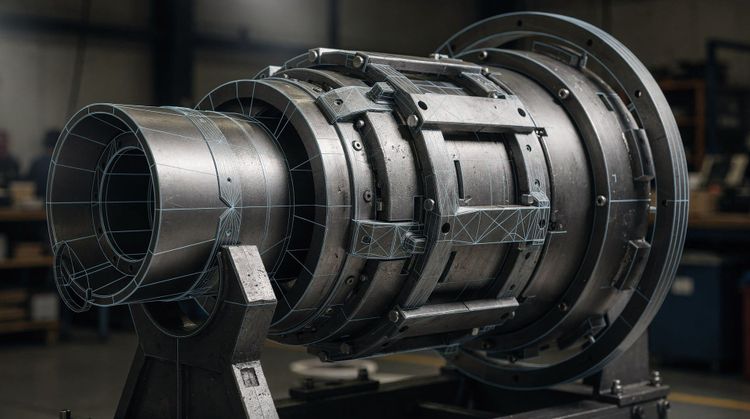
The Navy awarded a seven-year contract worth about $22.9 billion in mid-August to lift Tomahawk cruise missile production from

Repair Capacity Comes Before Hull Count
A presidential memorandum issued in mid-August directs the Department of War to restore capacity and competition to the maritime industrial base,
One Autonomy Stack, Two Economies
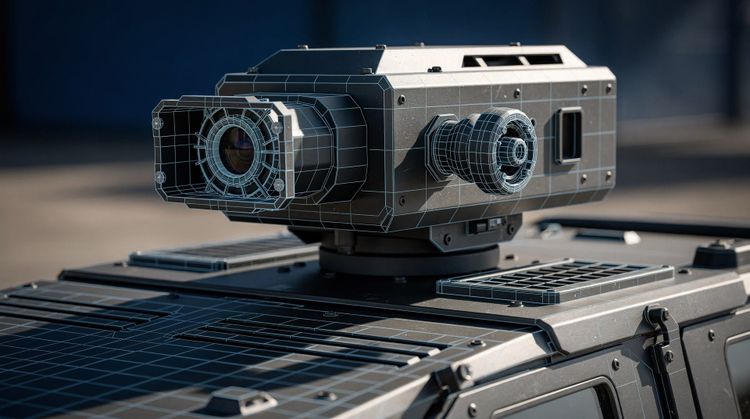
A publicly traded autonomous trucking company now sits inside three separate military ground vehicle efforts. It holds a Marine Corps contract to
Join The Strategic Reserve
Get encrypted weekly intelligence. No noise, just mission-critical data