
The Infrastructure Budget Just Reached the Ocean Floor
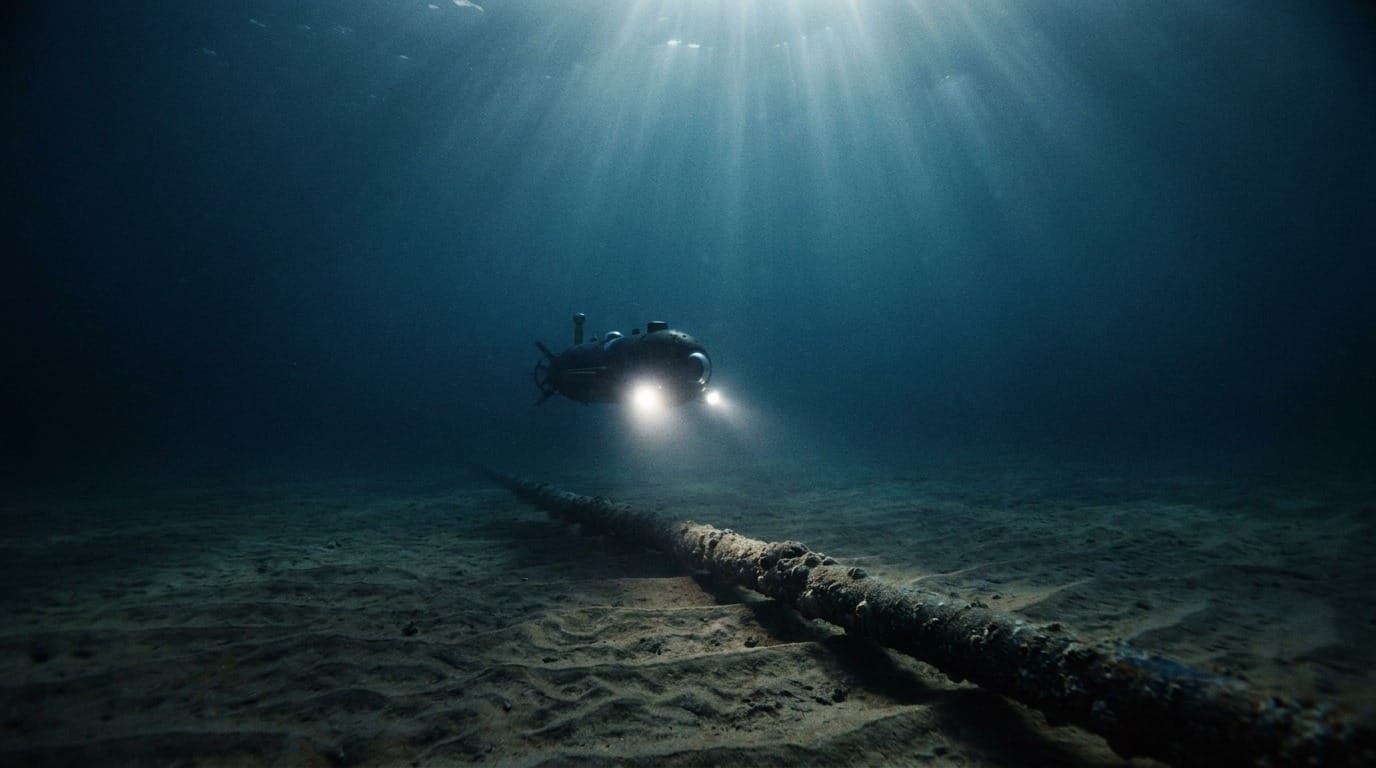
A bipartisan bill introduced in Congress this year, the Strategic Subsea Cables Act, is aimed at a piece of infrastructure most people never think about: the roughly 500 undersea cables that carry the overwhelming majority of the world's internet traffic and financial transactions. NATO&
A bipartisan bill introduced in Congress this year, the Strategic Subsea Cables Act, is aimed at a piece of infrastructure most people never think about: the roughly 500 undersea cables that carry the overwhelming majority of the world's internet traffic and financial transactions. NATO's Baltic Sentry mission has been running air and maritime drones specifically to watch over that infrastructure, and defense ministers have announced joint development of new payloads for uncrewed underwater vehicles built to protect it, with hardware expected starting in 2027.
Cable protection has moved from a niche maritime security topic to an active line item because the vulnerability is so plain once you see it: cutting or damaging a handful of cables can degrade or sever internet and financial connectivity for an entire region, and the seabed where these cables sit is largely unmonitored, unlit, and difficult to patrol. This is Fortress America logic applied to the ocean floor instead of a factory or a mine. A modern economy runs on data and capital moving at the speed of light through glass fiber laid across the seabed, and until recently almost none of the money spent hardening the industrial base touched that specific piece of infrastructure at all.
From the Battlefield to the Balance Sheet
Protecting seabed infrastructure at scale requires persistent underwater sensing, and that is a fundamentally different and harder problem than protecting a fixed facility on land, because the ocean floor cannot be fenced or gated. The joint development of new uncrewed underwater vehicle payloads specifically for cable protection signals that governments have concluded patrol ships and periodic inspection are not enough, and are instead funding always-on autonomous monitoring of the infrastructure itself. Capital allocators should treat this the same way this newsletter has read every other infrastructure-protection buildout: legislative attention plus a defined technology gap, persistent underwater monitoring, is the combination that turns into durable multi-year contracts once the enabling hardware actually ships in 2027 and beyond.
The Dual-Use Reality Check
The infrastructure being protected here is not military at all, it is the physical backbone of global telecommunications and finance, owned and operated overwhelmingly by private telecom companies and consortiums. That makes this one of the cleanest dual-use stories this newsletter covers in either direction: a government-funded underwater monitoring capability exists specifically to protect commercial infrastructure that a handful of telecom companies already spend heavily to insure and maintain. Any sensing, detection, or rapid-repair capability developed under a defense or NATO program has an immediate, obvious customer in the private cable operators and insurers who already bear the financial risk of an outage, and those companies have every incentive to co-invest in monitoring technology that reduces their own liability. A single cable cut can take days or weeks to repair with a specialized cable ship, and the commercial cost of that downtime already dwarfs what most companies spend on prevention today.
The Capital Signal
The signal is that critical infrastructure protection is expanding from the visible categories, power grids, pipelines, data centers, into infrastructure most people cannot see at all, and the seabed is the newest frontier of that expansion. Capital allocators should watch which companies win the underwater payload and sensing contracts tied to this buildout, because persistent seabed monitoring is a capability with a ready-made commercial customer base the moment it is proven, unlike many defense technologies that take years to find a civilian buyer. The 2027 hardware delivery timeline gives a concrete near-term milestone to track progress against, rather than an open-ended research promise, and it is close enough that early contract awards should start clarifying which vendors are actually positioned to deliver.
Signal: The next piece of critical infrastructure getting a dedicated protection budget is the one sitting at the bottom of the ocean that almost nobody thinks about until it stops working.
Marcus Cole, Top Margin
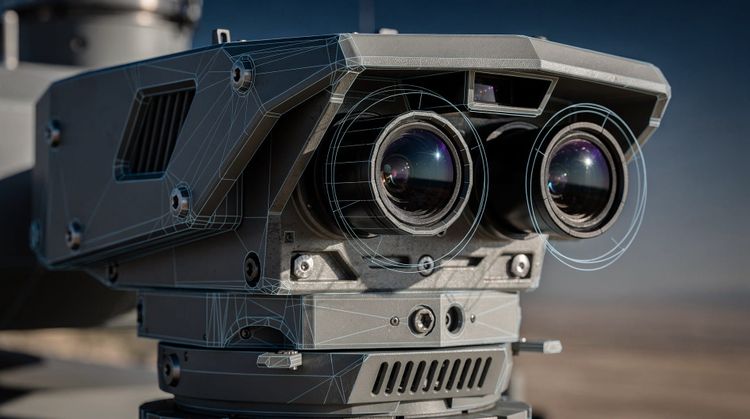
Drone Defense Is a Cost Curve Problem
At the start of July the Army awarded AeroVironment a contract worth up to $500 million over three years, through Army Contracting
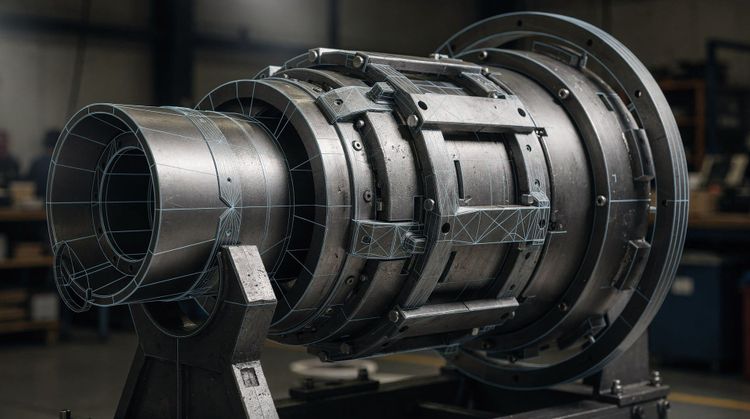
The Missile Ramp Runs Through the Motor Supplier
The Navy awarded a seven-year contract worth about $22.9 billion in mid-August to lift Tomahawk cruise missile production from
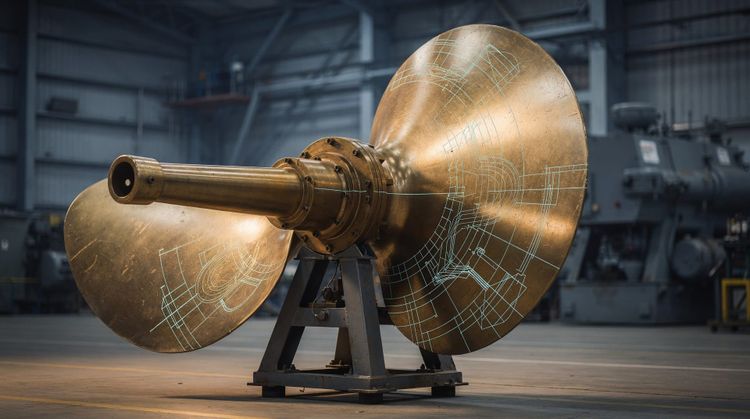
Repair Capacity Comes Before Hull Count
A presidential memorandum issued in mid-August directs the Department of War to restore capacity and competition to the maritime industrial base,
One Autonomy Stack, Two Economies
A publicly traded autonomous trucking company now sits inside three separate military ground vehicle efforts. It holds a Marine Corps contract to
Join The Strategic Reserve
Get encrypted weekly intelligence. No noise, just mission-critical data