
The Hole in the Magazine Is Explosives
A county in western Kentucky is now the site of roughly a billion dollars of explosives construction. One contract, placed two years ago and worth four hundred and thirty five million dollars, funds a plant to make TNT. A second, worth five hundred and eighty one
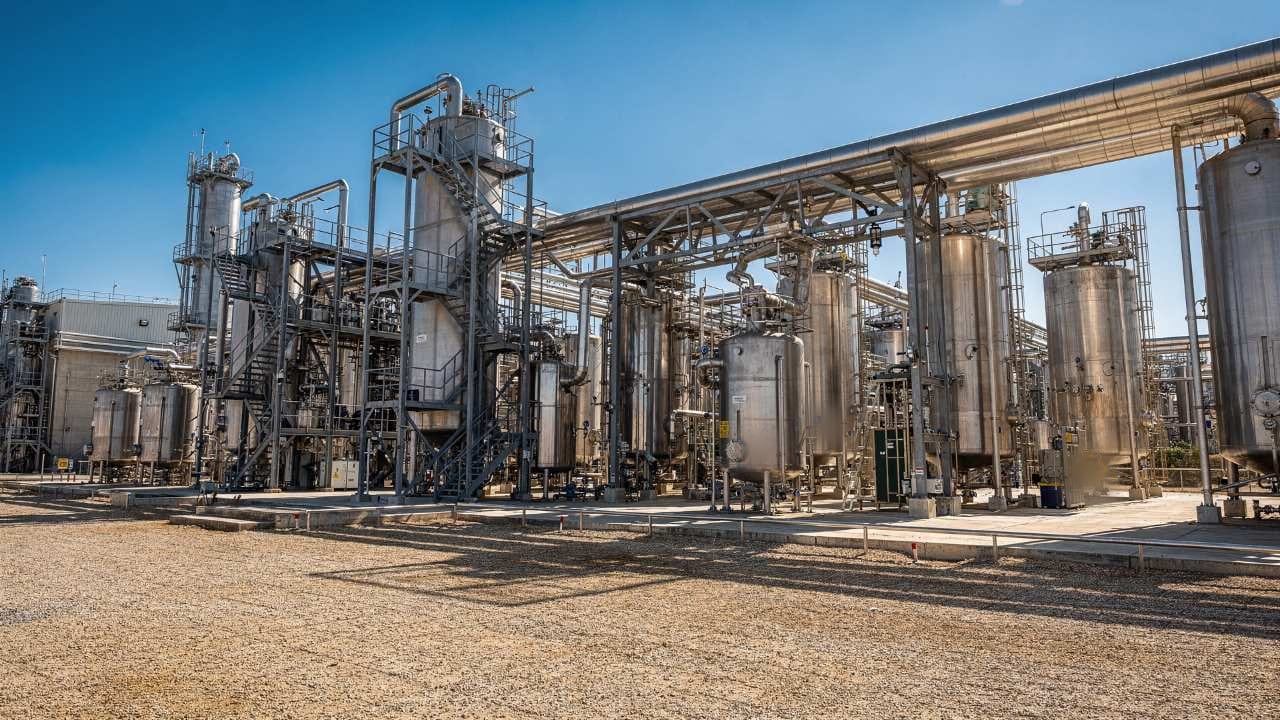
A county in western Kentucky is now the site of roughly a billion dollars of explosives construction. One contract, placed two years ago and worth four hundred and thirty five million dollars, funds a plant to make TNT. A second, worth five hundred and eighty one million and awarded last month, funds a plant to make the insensitive explosive used to fill artillery shells, sized at about eight million pounds a year.
The dates are the part worth reading. The county said last year that TNT production would start in the first quarter of 2028. The company now says the first quarter of 2029. The insensitive explosive plant is scheduled for 2030.
From the Battlefield to the Balance Sheet
Almost every conversation about artillery capacity is about shell bodies, and shell bodies are the easy half. A finished round is a metal body, a fuze, a propelling charge and an explosive fill, and the fill has been the constraint the whole time. No TNT has been made in the United States since the middle of the 1980s, which means the explosive in American artillery has been bought abroad for forty years.
That is a different kind of dependency from the ones that usually get attention. A foreign source of a finished component can be replaced by qualifying another supplier. A foreign source of a bulk chemical with no domestic production at all cannot, because the capability itself is gone, and rebuilding it means permitting, siting, environmental review and a workforce that does not exist. The energetics trade is small, hazardous and capital intensive, and its specialists retired.
The economics explain why it vanished. Explosives manufacture is a commodity chemical business with catastrophic downside risk and a single lumpy customer, which is close to the worst combination a private investor can be offered. Nobody was going to build this plant speculatively, so it did not get built, and the only thing that changes that calculus is the government paying the capital cost outright.
Notice what the money buys in jobs. The two plants together are expected to support something like a hundred and forty permanent positions, against a construction effort one study put at twenty five hundred workers over four to five years. This is capital intensity, not employment, and it should be read that way.
The Dual-Use Reality Check
The commercial twin here is mining, and it is the reason this is buildable at all. One of the partners in the insensitive explosives venture is a commercial explosives company whose ordinary business is blasting agents for quarries and mines, and the site already hosts industrial explosives operations. The chemistry, the handling, the permits and the safety culture transfer directly.
That shared base is what makes the difference between restarting an industry and inventing one. It also sets a limit. Commercial blasting agents are a price competitive bulk business, and the military grades are a small, demanding, high specification sliver on top of it. The plant economics depend on the defense order continuing, because there is no civilian market for military explosive fill to absorb the capacity if the order stops.
The Capital Signal
The capital signal is that the deepest hole in the munitions base is chemical rather than mechanical, and it is being filled on a timeline that arrives at the end of the decade. Everything announced about artillery rates before then is constrained by fill supply that is still imported.
The structural read is to treat the schedule as the number to watch, not the dollar value. A plant that slipped a year before the first shovel moved is a plant with a real completion date somewhere beyond its stated one, and energetics construction is unusually prone to this because the permitting and safety review are not compressible. Watch for the solicitation of the construction contractor, for groundbreaking, and for the first qualification lot, in that order, and treat each as a gate rather than a formality. Watch too for who supplies the precursors, since a domestic fill plant that imports its feedstock chemicals has moved the dependency rather than removed it.
Signal: America stopped making the explosive that fills its artillery forty years ago, and the plants to restart it do not produce until the end of the decade.
Marcus Cole, Top Margin

Someone Else Is Funding Your Copper Mine
In the third week of October a Canadian miner and a Japanese trading house took a final investment decision on a copper

The Battery Found a Better Customer Than the Car
In the third week of October a solid state battery developer announced plans for a hundred megawatt hour cell production line, targeting

The Startup Moved Into the Prime's Factory
In the middle of October a major missile maker announced a three hundred million dollar expansion of its Texas plant, part of

The Chipmaker Became the Refiner's Banker
In the third week of October one of the three large memory manufacturers said it would put strategic funding into a materials
Join The Strategic Reserve
Get encrypted weekly intelligence. No noise, just mission-critical data