
Quantum Sensing Is Already Shipping, Quantum Computing Is Not
Honeywell, Lockheed Martin, and a handful of quantum startups are all racing toward the same deadline this year: a working navigation system that does not need GPS at all. Q-CTRL's Ironstone Opal demonstrated one hundred times the precision of standard GPS-denied navigation
Honeywell, Lockheed Martin, and a handful of quantum startups are all racing toward the same deadline this year: a working navigation system that does not need GPS at all. Q-CTRL's Ironstone Opal demonstrated one hundred times the precision of standard GPS-denied navigation and more than one hundred times the accuracy of high-end inertial systems in DARPA testing this year, and Lockheed is developing its own quantum-enabled inertial navigation system with partners Q-CTRL and AOSense under a Defense Innovation Unit contract. Honeywell has two parallel DoD contracts running the same race under different names, one focused on inertial sensing and the other on magnetic navigation, a sign the Pentagon is hedging across more than one underlying approach at once.
GPS is a single point of failure hiding inside almost every modern system that needs to know where it is. It can be jammed, spoofed, or simply degraded, and unlike most defense vulnerabilities, this one is not exotic or expensive to exploit. Quantum sensing is one of the few technologies delivering a real, fielded alternative right now rather than a promise for the next decade, and multiple primes and startups are being funded in parallel precisely because whoever solves position, navigation, and timing without a satellite signal removes an entire category of risk at once.
From the Battlefield to the Balance Sheet
Unlike quantum computing, which by most credible estimates remains years away from commercial usefulness, quantum sensing is already outperforming existing hardware in controlled tests today, which is exactly why the funding behind it looks different. DARPA and the Defense Innovation Unit are running several contractors, Honeywell, Lockheed, Q-CTRL, Infleqtion, and others, through parallel demonstration programs rather than picking a single winner, the same multi-vendor pattern this newsletter has now tracked across drones, lasers, and unmanned vessels. That structure exists because the underlying quantum sensor architectures differ enough that no one yet knows which one scales best outside a laboratory, and the government would rather fund several credible paths than bet everything on one. Capital allocators should treat a company's demonstrated accuracy improvement in real DARPA testing, not its lab claims, as the signal that matters, since Q-CTRL's stated results this year were independently validated through that exact process.
The Dual-Use Reality Check
Every civilian system that depends on GPS today, commercial aviation, maritime shipping, autonomous vehicles, and the timing signals that synchronize financial markets and power grids, shares the exact same vulnerability the military is racing to solve. A quantum sensor accurate enough to navigate a military platform without satellites is, by definition, accurate enough to keep a commercial airliner or a container ship on course through a GPS outage or a jammed signal near a contested border. This is dual-use in its purest form, because the underlying physics problem, knowing your position and the time precisely without an external reference, is identical whether the customer is a fighter jet or a cargo vessel. Once quantum navigation hardware clears military certification and comes down in size and cost, commercial aviation and shipping are the most obvious next buyers, since both industries already spend heavily on backup navigation systems for exactly this failure mode.
The Capital Signal
The signal is that quantum sensing has quietly become one of the more commercially credible corners of the quantum technology sector, precisely because it does not require the error-correction breakthroughs that quantum computing still needs to become useful. Capital allocators chasing the broader quantum theme should separate sensing from computing accordingly, since sensing companies are shipping validated hardware into real defense programs now while computing remains a longer-dated bet. Watch for the same multi-vendor government funding pattern to keep favoring whichever companies convert DARPA test results into fielded hardware fastest, because that conversion is the actual product here, not the underlying physics paper. A sensor that only works inside a national lab is not a product, no matter how impressive the number attached to it.
Signal: Quantum computing is still a promise, quantum sensing is already shipping, and capital should price the two very differently.

Marcus Cole, Top Margin
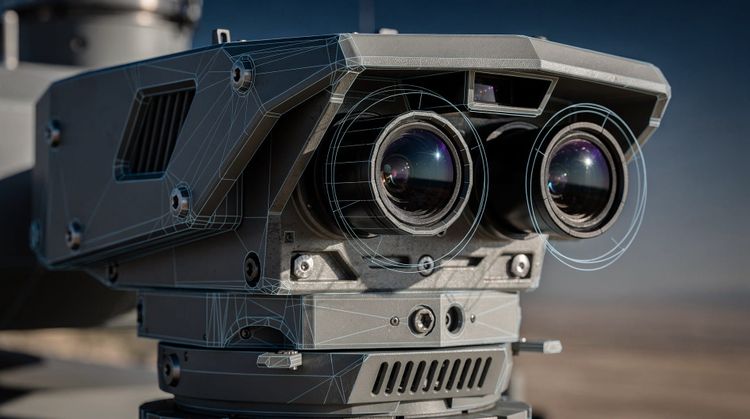
Drone Defense Is a Cost Curve Problem
At the start of July the Army awarded AeroVironment a contract worth up to $500 million over three years, through Army Contracting
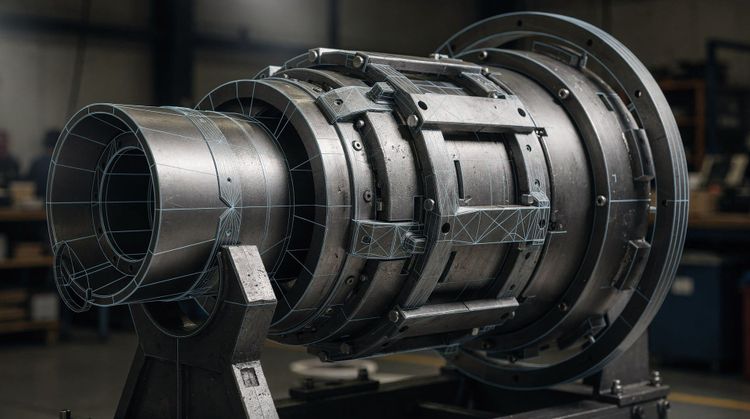
The Missile Ramp Runs Through the Motor Supplier
The Navy awarded a seven-year contract worth about $22.9 billion in mid-August to lift Tomahawk cruise missile production from
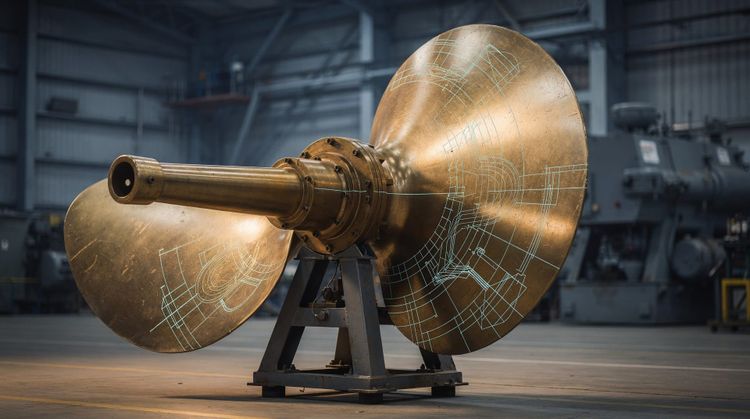
Repair Capacity Comes Before Hull Count
A presidential memorandum issued in mid-August directs the Department of War to restore capacity and competition to the maritime industrial base,
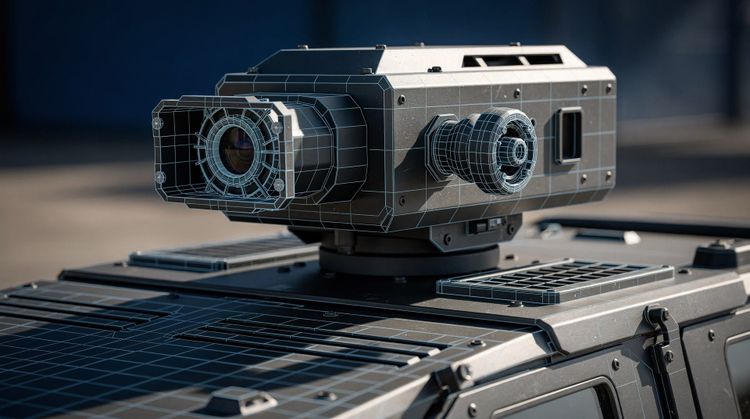
One Autonomy Stack, Two Economies
A publicly traded autonomous trucking company now sits inside three separate military ground vehicle efforts. It holds a Marine Corps contract to
Join The Strategic Reserve
Get encrypted weekly intelligence. No noise, just mission-critical data