
Inventory Is a Strategy Again
The National Defense Stockpile has around $2 billion in its transaction fund from last year's legislation, the department signalled roughly another billion of procurement intent, and there is a broader initiative aimed at building a $12 billion critical minerals reserve financed partly through institutional
The National Defense Stockpile has around $2 billion in its transaction fund from last year's legislation, the department signalled roughly another billion of procurement intent, and there is a broader initiative aimed at building a $12 billion critical minerals reserve financed partly through institutional investors and the export credit agency. The shopping list runs to copper, nickel, lithium, antimony, tungsten, graphite, indium, bismuth, vanadium, fluorspar and sixteen rare earth elements.
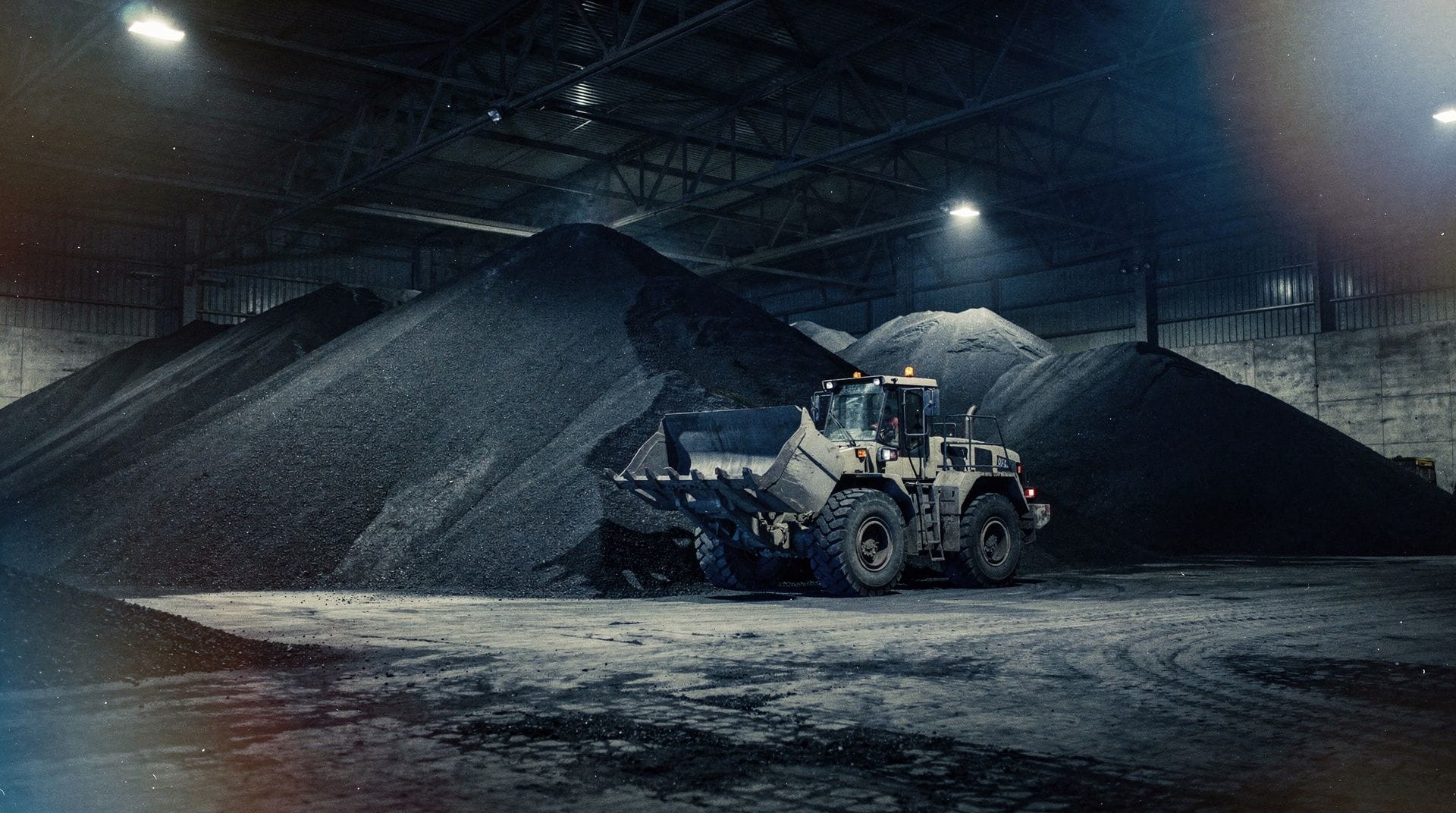
Strip away the strategic language and this is a government deciding to hold physical inventory at scale. That is a reversal of the single most influential idea in manufacturing over the past forty years, which was that inventory is waste.
From the Battlefield to the Balance Sheet
Just-in-time production was not a fashion, it was a correct response to the conditions of its time. When supply was reliable and capital had a cost, holding stock meant tying up working capital, absorbing storage and obsolescence risk, and hiding process problems. A generation of operations management was built on driving inventory toward zero, and the companies that did it best were rewarded for it.
That trade only works while supply is reliable, and the past several years have repriced reliability. An input you cannot buy at any price has an effectively infinite cost, and once a business has experienced that even once, the calculation behind carrying stock changes permanently. What the stockpile programs represent is the public sector doing this arithmetic explicitly, for materials where a shortage would be unrecoverable, and putting a number on it.
For allocators the consequence is a change in what a strong balance sheet looks like in industrial companies. Rising inventory used to read as a warning, a sign of slowing sales or poor discipline. In categories exposed to concentrated foreign supply it now reads as insurance, and the firms carrying six months of a critical input are not necessarily the badly run ones. That distinction is not yet reliably made in how these businesses are analyzed.
The Dual-Use Reality Check
Almost every mineral on that list is overwhelmingly consumed by civilian industry. Copper is construction and electrification, nickel and lithium are batteries and stainless steel, tungsten is cutting tools, graphite is anodes and electrodes, fluorspar is refrigerants and steelmaking. Defense consumption is a rounding error in tonnage for most of them, which means a government buying at this scale is a new participant in commodity markets that industrial firms have to buy in too.
That has a real price effect, and it is worth being clear-eyed about the direction. Government purchasing for a stockpile adds demand without adding supply, and in thin markets for the smaller minerals it can move prices meaningfully. The offsetting benefit is that a committed public buyer gives producers the demand certainty to finance new capacity, which eventually adds supply. Whether the price or the capacity effect dominates depends entirely on how the buying is structured, and multi-year offtake agreements do far more for supply than opportunistic spot purchases do.
The Capital Signal
The capital signal is that inventory has been reclassified from a cost to be minimized into a strategic asset, first by governments and increasingly by the manufacturers who depend on the same inputs. That is a slow, broad and durable change in working capital across industrial supply chains, and it is not a defense story despite arriving through defense budgets.
The structural read is that the beneficiaries are wider than the miners. Storage and handling of specialty materials, assaying and quality certification, the trading and logistics firms that manage strategic reserves, and the recyclers who become economic at higher price floors all sit in the path of this money. So does anyone financing inventory, because carrying six months of a critical input costs money and someone lends against it. The mineral producers get the headlines. The businesses built around holding, verifying and financing the material are the quieter position, and they do not require picking which mine gets built.
Signal: Inventory has stopped being waste and become insurance, and that repricing changes working capital across industry, not just in defense.
Marcus Cole, Top Margin

Someone Else Is Funding Your Copper Mine
In the third week of October a Canadian miner and a Japanese trading house took a final investment decision on a copper

The Battery Found a Better Customer Than the Car
In the third week of October a solid state battery developer announced plans for a hundred megawatt hour cell production line, targeting

The Startup Moved Into the Prime's Factory
In the middle of October a major missile maker announced a three hundred million dollar expansion of its Texas plant, part of

The Chipmaker Became the Refiner's Banker
In the third week of October one of the three large memory manufacturers said it would put strategic funding into a materials
Join The Strategic Reserve
Get encrypted weekly intelligence. No noise, just mission-critical data