
Accrediting the World's AI Instead of Building Its Own
In May, the Pentagon signed agreements with seven of the largest technology companies in the country, including Microsoft, Amazon, Google, Nvidia, and Oracle, to deploy commercial AI tools directly onto its most classified networks, the environments known as Impact Level 6 and Impact Level 7. Those
In May, the Pentagon signed agreements with seven of the largest technology companies in the country, including Microsoft, Amazon, Google, Nvidia, and Oracle, to deploy commercial AI tools directly onto its most classified networks, the environments known as Impact Level 6 and Impact Level 7. Those levels handle the government's most sensitive information, and until this year the AI running inside them was almost entirely custom-built by defense-specific vendors. The hyperscalers that already run most of the world's commercial cloud computing are now being invited to run the same underlying AI infrastructure inside the most restricted rooms in government.
That is a bigger shift than a batch of contract announcements suggests. Building AI infrastructure that meets Impact Level 6 and 7 accreditation, physical isolation, personnel vetting, hardware provenance requirements far beyond a normal commercial data center, is expensive and slow. Getting seven companies through that bar at once signals the Pentagon deciding it would rather accredit the commercial AI industry's existing infrastructure than keep building bespoke defense-only systems from scratch. The stated goal is straightforward, faster data synthesis and better situational awareness for decision-makers, but the mechanism for getting there is a wholesale change in who is allowed to build it.
From the Battlefield to the Balance Sheet
Classified compute has historically been a closed, defense-specific market served by a small number of specialized contractors, because the accreditation bar kept ordinary commercial cloud providers out. Opening that market to the same companies that already run commercial AI infrastructure at massive scale means the government gets access to a far larger, faster-moving base of AI capability than any single defense contractor could build alone, and the participating companies get a permanent foothold inside the most durable, highest-margin corner of government computing. Capital allocators should read this the way this newsletter has read every other multi-vendor accreditation push across drones, lasers, and satellites: the government is deliberately keeping several qualified suppliers rather than picking one, and the real prize is not the initial agreement but whichever company's infrastructure becomes the default environment that new AI applications get built on top of first.
The Dual-Use Reality Check
The AI infrastructure being accredited for classified government use is, with very few exceptions, the same underlying compute, chips, and software stack these companies already sell to every other enterprise customer, banks, hospitals, manufacturers, and retailers running the identical cloud AI platforms for entirely civilian purposes. This is dual-use running in the opposite direction from most of the technology this newsletter covers: instead of a defense-specific tool eventually finding a civilian market, an already-massive civilian AI infrastructure is being extended into defense, with the classified accreditation functioning as a new certification layer on top of infrastructure that was built for, and paid for by, the commercial market first. The capital intensity of frontier AI compute is now so large that defense-specific infrastructure built in isolation could never keep pace with what the commercial hyperscalers are already deploying for other customers.
The Capital Signal
The signal is that the compute layer, not any single algorithm or defense-specific application, has become the thing worth accrediting and fighting over, because whichever company's infrastructure classified government users get comfortable building on top of first captures years of follow-on application development. Capital allocators should watch how quickly actual classified workloads move onto this newly accredited infrastructure, not just how many companies signed initial agreements, since accreditation is a necessary but not sufficient step toward real government spending. The compute providers who convert accreditation into daily classified usage fastest will be positioned as the default layer underneath the next generation of defense AI applications, regardless of which specific vendor builds any individual tool on top of it. Accreditation on its own is a headline, sustained daily workload is the actual revenue.
Signal: The Pentagon just decided it is easier to accredit the world's AI infrastructure than to keep building its own from scratch.

Marcus Cole, Top Margin
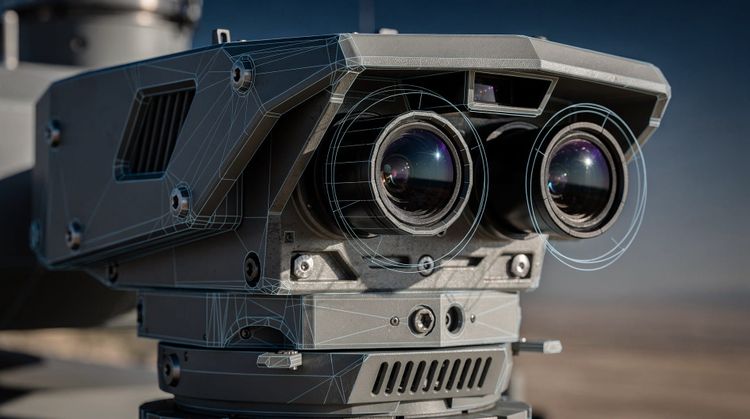
Drone Defense Is a Cost Curve Problem
At the start of July the Army awarded AeroVironment a contract worth up to $500 million over three years, through Army Contracting
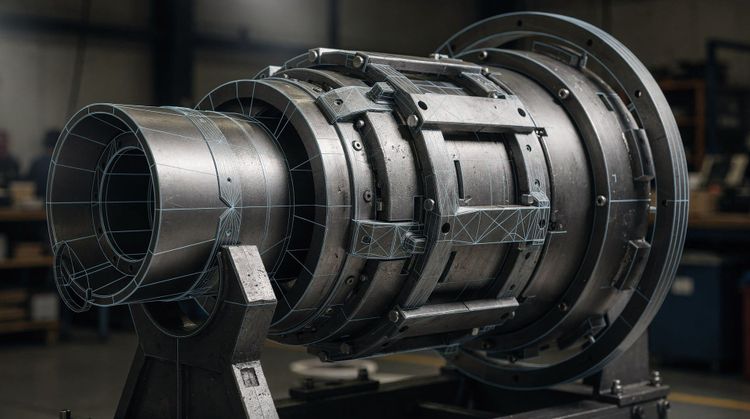
The Missile Ramp Runs Through the Motor Supplier
The Navy awarded a seven-year contract worth about $22.9 billion in mid-August to lift Tomahawk cruise missile production from

Repair Capacity Comes Before Hull Count
A presidential memorandum issued in mid-August directs the Department of War to restore capacity and competition to the maritime industrial base,
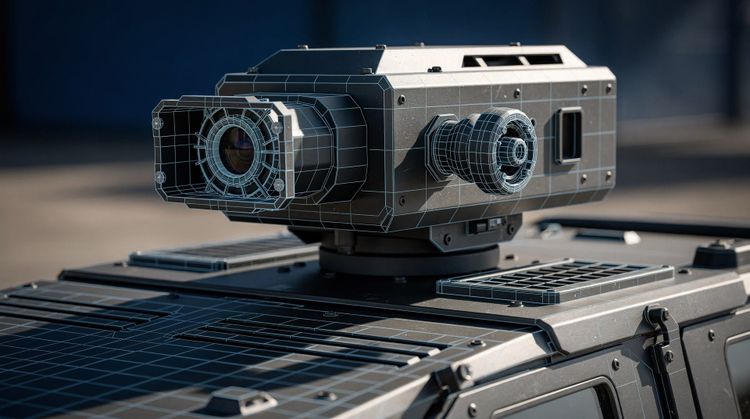
One Autonomy Stack, Two Economies
A publicly traded autonomous trucking company now sits inside three separate military ground vehicle efforts. It holds a Marine Corps contract to
Join The Strategic Reserve
Get encrypted weekly intelligence. No noise, just mission-critical data