
A Labor Problem Solved Once and Sold Indefinitely
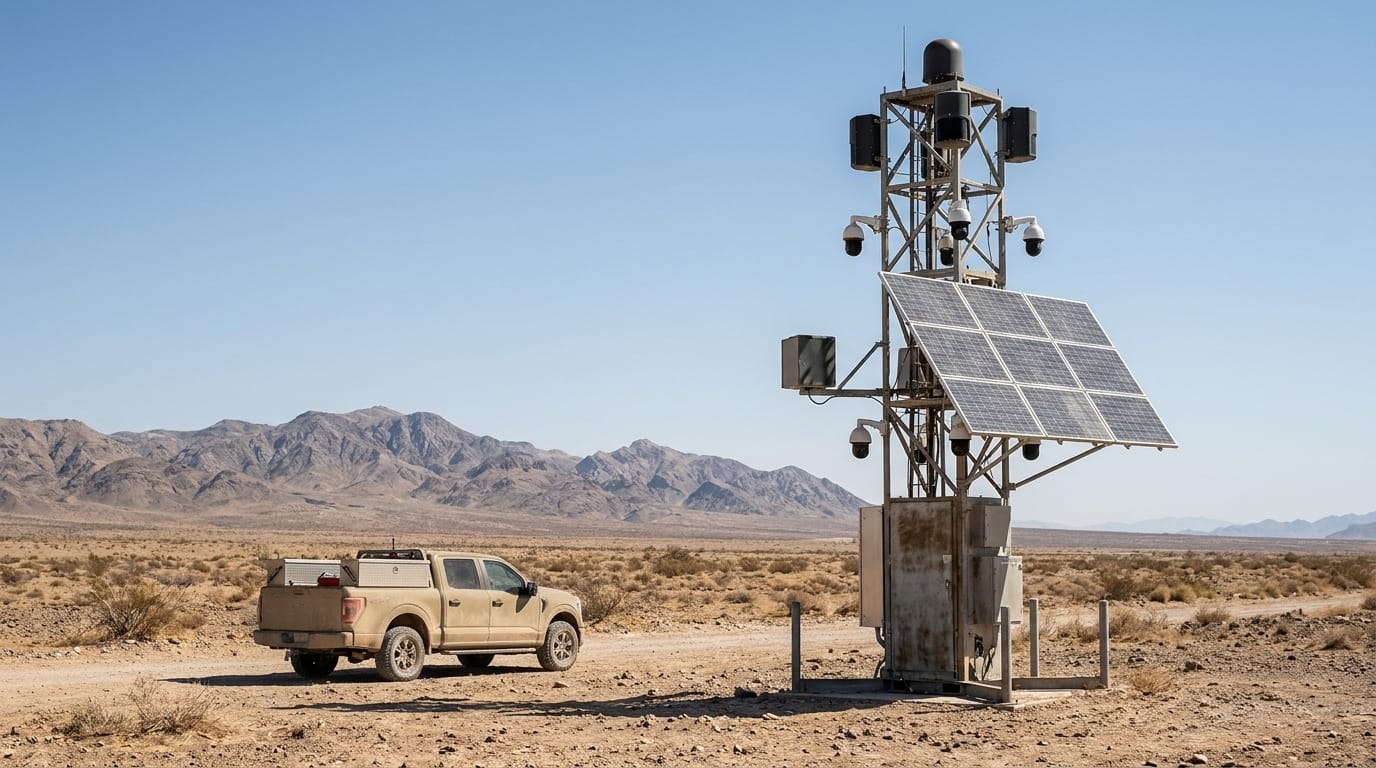
Customs and Border Protection awarded Anduril a $363 million contract in June to deploy more than 200 autonomous surveillance towers along the southwest border, each capable of detecting, classifying, and tracking objects at ranges beyond five miles. GDIT separately picked up a $71 million task order
Customs and Border Protection awarded Anduril a $363 million contract in June to deploy more than 200 autonomous surveillance towers along the southwest border, each capable of detecting, classifying, and tracking objects at ranges beyond five miles. GDIT separately picked up a $71 million task order for a competing tower system that can track hundreds of targets at once using the same category of edge AI and video analytics. Homeland Security is putting roughly a billion dollars behind the broader Integrated Surveillance Towers Program, aiming to grow the network from about 830 towers today to 2,300 by 2034.
This is the same sensor fusion economics this newsletter has tracked across drones and lasers, just pointed at a fixed perimeter instead of a moving platform. A tower that can watch twelve kilometers of open terrain without a person staring at a monitor replaces a category of labor-intensive surveillance that used to require constant human attention, and it does it at a fraction of the ongoing cost. The towers run on Anduril's Lattice software, the same platform this newsletter has already tracked scaling into a $20 billion Army enterprise contract, which means every improvement funded by one program compounds into the other.
From the Battlefield to the Balance Sheet
Border surveillance has historically been a manpower problem disguised as a technology problem, solved mostly by adding more agents to watch more cameras. The current buildout inverts that by pushing detection and classification onto the sensor itself, so a human only gets involved once the system has already decided something is worth attention. That shift changes the economics of the entire program: the marginal cost of covering another mile of border is a tower and its maintenance contract, not another salaried position that scales linearly with terrain. Capital allocators should note that CBP awarded two different companies, Anduril and GDIT, competing tower contracts within weeks of each other, the same multi-vendor hedging pattern the government has used across drones, lasers, and quantum sensors, rather than betting the entire program on a single supplier's architecture.
The Dual-Use Reality Check
The edge AI and video analytics running on a border tower, detect an object, classify what it is, track its movement, alert a human only when necessary, is functionally identical to what a utility company wants for monitoring transmission line right-of-ways, what a port operator wants for perimeter security, or what a large agricultural operation wants for monitoring remote acreage nobody can physically patrol. None of these commercial customers need a system built for a border specifically, they need exactly the same detect-classify-track pipeline running against a different kind of intrusion. A company that proves its towers can reliably operate unattended across harsh terrain for CBP has already cleared the hardest part of selling the same system to a critical infrastructure operator, which is proving the sensor and software stack works without a person standing next to it. Extreme heat, dust, and remote power constraints along the southwest border are, if anything, a harder test environment than most commercial sites will ever present, which makes the border deployment a genuine proving ground rather than a marketing claim.
The Capital Signal
The signal is that autonomous perimeter security has quietly become a proven, government-validated product category rather than a pitch deck concept, and the vendors building toward the 2,300-tower target are simultaneously building a reference deployment any commercial security buyer can point to. Watch which of the two current vendors, or others that enter as the program scales toward 2034, converts government tower deployments into a repeatable manufacturing and software product rather than a one-off government integration project, because that repeatability is what turns a border contract into a platform business. A tower that has to be custom-engineered for every new site is a services business with a ceiling, not the scalable platform the 2,300-tower target actually requires.
Signal: A tower that never gets tired of watching is a labor-cost problem solved once and sold indefinitely.
Marcus Cole, Top Margin
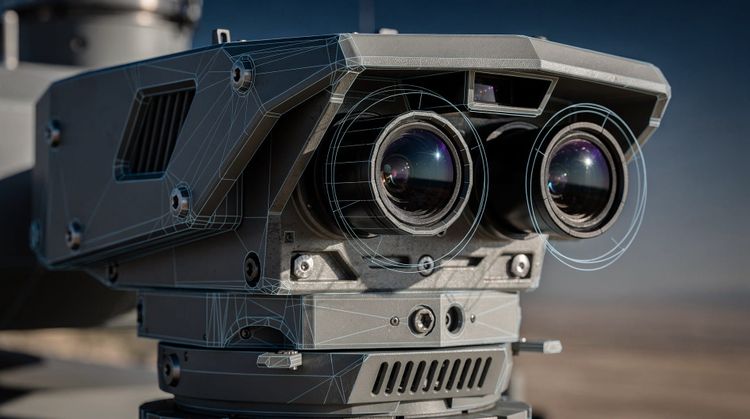
Drone Defense Is a Cost Curve Problem
At the start of July the Army awarded AeroVironment a contract worth up to $500 million over three years, through Army Contracting
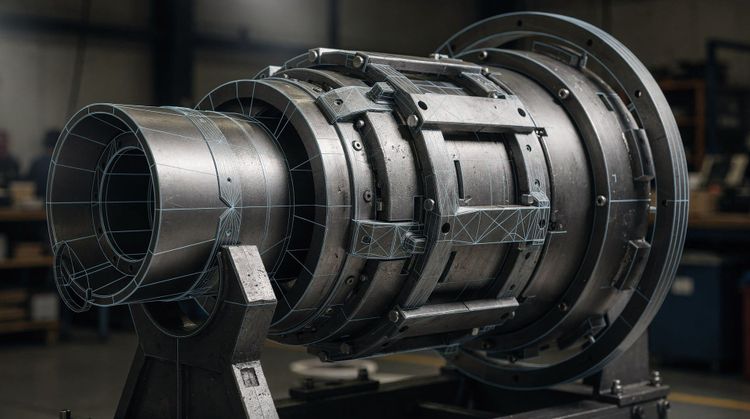
The Missile Ramp Runs Through the Motor Supplier
The Navy awarded a seven-year contract worth about $22.9 billion in mid-August to lift Tomahawk cruise missile production from
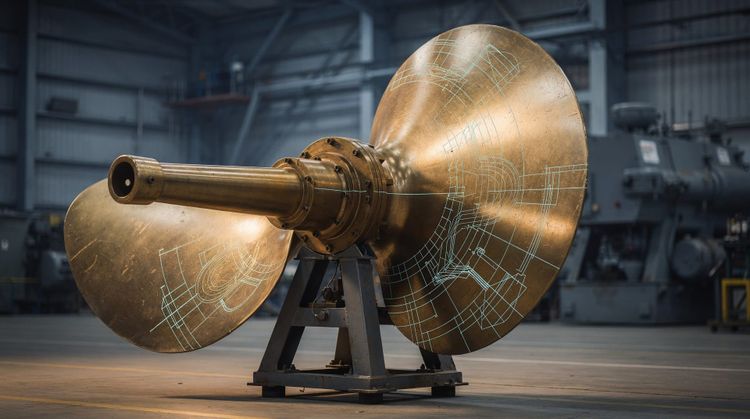
Repair Capacity Comes Before Hull Count
A presidential memorandum issued in mid-August directs the Department of War to restore capacity and competition to the maritime industrial base,
One Autonomy Stack, Two Economies
A publicly traded autonomous trucking company now sits inside three separate military ground vehicle efforts. It holds a Marine Corps contract to
Join The Strategic Reserve
Get encrypted weekly intelligence. No noise, just mission-critical data