
In Ground Vehicles, Weight Is the Cost
In early October the Army began live fire testing of its next main battle tank design, about ten months after the first prototype arrived, with testing scheduled to run into next spring. The headline specification is not firepower. It is mass. The target is sixty tons
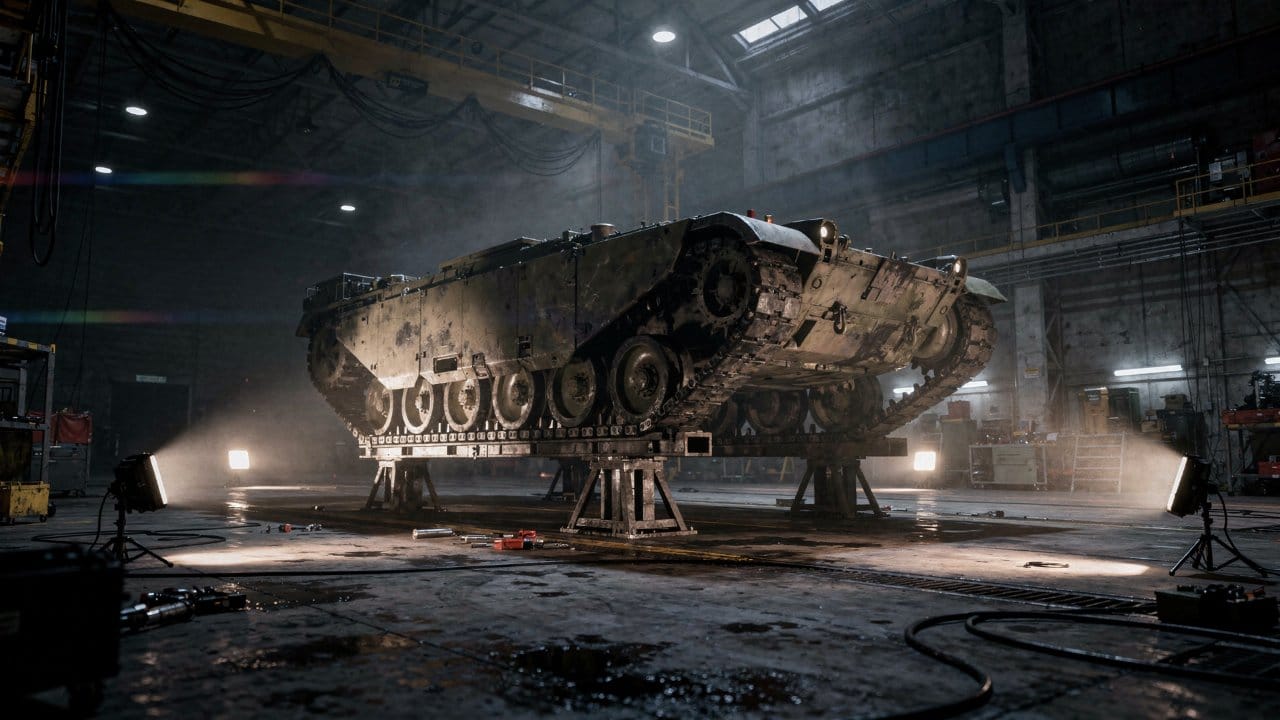
In early October the Army began live fire testing of its next main battle tank design, about ten months after the first prototype arrived, with testing scheduled to run into next spring. The headline specification is not firepower. It is mass. The target is sixty tons against roughly seventy eight for the current production variant, a reduction of about a quarter, with a crew of three instead of four, an autoloader and a claimed forty to fifty percent cut in fuel consumption.
In the same fortnight the Army put another eight hundred and eighteen million dollars into armoured personnel carriers built in Pennsylvania, taking that programme to just under three and three tenths billion, and quietly reversed a decision to stop buying a wheeled vehicle, ordering twenty more.
From the Battlefield to the Balance Sheet
Weight is the variable that prices everything else in a ground fleet, and the costs it drives are mostly invisible in the vehicle's own price. A seventy eight ton vehicle needs a heavier recovery vehicle, a heavier bridge, a stronger trailer, more fuel, more tankers and more ships or aircraft to move any of it. The purchase price of a tank is a small fraction of what the fleet costs over thirty years, and most of the rest scales with mass.
Cutting a quarter of the weight therefore does something more interesting than improve mobility. It changes the cost structure of the force that uses it, and it changes the industrial demand behind it. Fewer tons means less steel and less armour material per vehicle, but it also means a different set of suppliers, because the way you take weight out is composites, hybrid electric propulsion, active protection in place of passive armour, and automation that removes a crew station. Those are electronics, power electronics and materials businesses rather than heavy fabrication businesses.
The autoloader is the clearest example. Removing a crew member removes a hatch, a seat, armour around both and the volume they occupy, and the saving compounds through the whole vehicle. It is the same logic that makes an uncrewed aircraft smaller than a crewed one, and it has the same consequence for who supplies what.
Meanwhile the legacy programmes keep buying, which is the sensible pattern. A new design in live fire testing is years from a production decision, and the reversal on the wheeled vehicle is a reminder that stopping a line is easy to decide and expensive to undo.
The Dual-Use Reality Check
Almost every weight reduction technology here comes from the civilian vehicle world, where mass has been the binding constraint for a decade for a different reason. Emissions rules and battery range both reward taking weight out, so the automotive industry has spent years industrialising aluminium and composite structures, high voltage hybrid drivetrains, thermal management and power electronics. A hybrid propulsion system in a tracked vehicle is drawing on a supply base built for buses, trucks and mining equipment.
The transfer is genuinely two way on the diesel side. The engine family selected for this design comes from a builder whose main business is construction and mining equipment, which is exactly the kind of commercial supplier the acquisition reforms of this year have been trying to attract. A commercial engine in a military vehicle brings a parts network, a service base and a cost structure that a bespoke military engine never has.
What does not transfer is the protection. Active protection systems, armour materials and the sensors behind them have no civilian market, and they are where the weight saving is bought.
The Capital Signal
The capital signal is that the content of a ground vehicle is shifting from steel toward electronics, power conversion and protection systems, and the supplier base will shift with it over the next decade. The companies that bend and weld heavy plate are not the companies that will capture the growth in this category.
The structural read is to watch the sustainment and logistics implications rather than the vehicle programme itself. A lighter fleet with lower fuel consumption reduces demand for tankers, for recovery equipment and for sealift, which are businesses with their own listed suppliers. Watch also for the production decision date rather than the test schedule, because live fire testing into next spring with a research request for the following year means no meaningful production money for several years, while the legacy lines continue to take real orders. The old programmes are the revenue and the new design is the option, and they are frequently priced the other way round.
Signal: Taking a quarter of the weight out of a tank moves the value from heavy fabrication to electronics and protection, and it reprices the whole logistics tail behind it.
Marcus Cole, Top Margin

The Battery Found a Better Customer Than the Car
In the third week of October a solid state battery developer announced plans for a hundred megawatt hour cell production line, targeting

The Startup Moved Into the Prime's Factory
In the middle of October a major missile maker announced a three hundred million dollar expansion of its Texas plant, part of

The Chipmaker Became the Refiner's Banker
In the third week of October one of the three large memory manufacturers said it would put strategic funding into a materials

The Ten Year Order Buys Certainty, Not Jets
In late October the Pentagon and the prime contractor behind the F-35 agreed on a framework covering at least eight hundred
Join The Strategic Reserve
Get encrypted weekly intelligence. No noise, just mission-critical data