
The Government Just Set a Price for Magnets
Buried in the Department of War's partnership with MP Materials is a provision that matters more than the dollar figures around it. The agreement establishes a floor price of $110 per kilogram for neodymium-praseodymium, and commits the government to buy the entire output
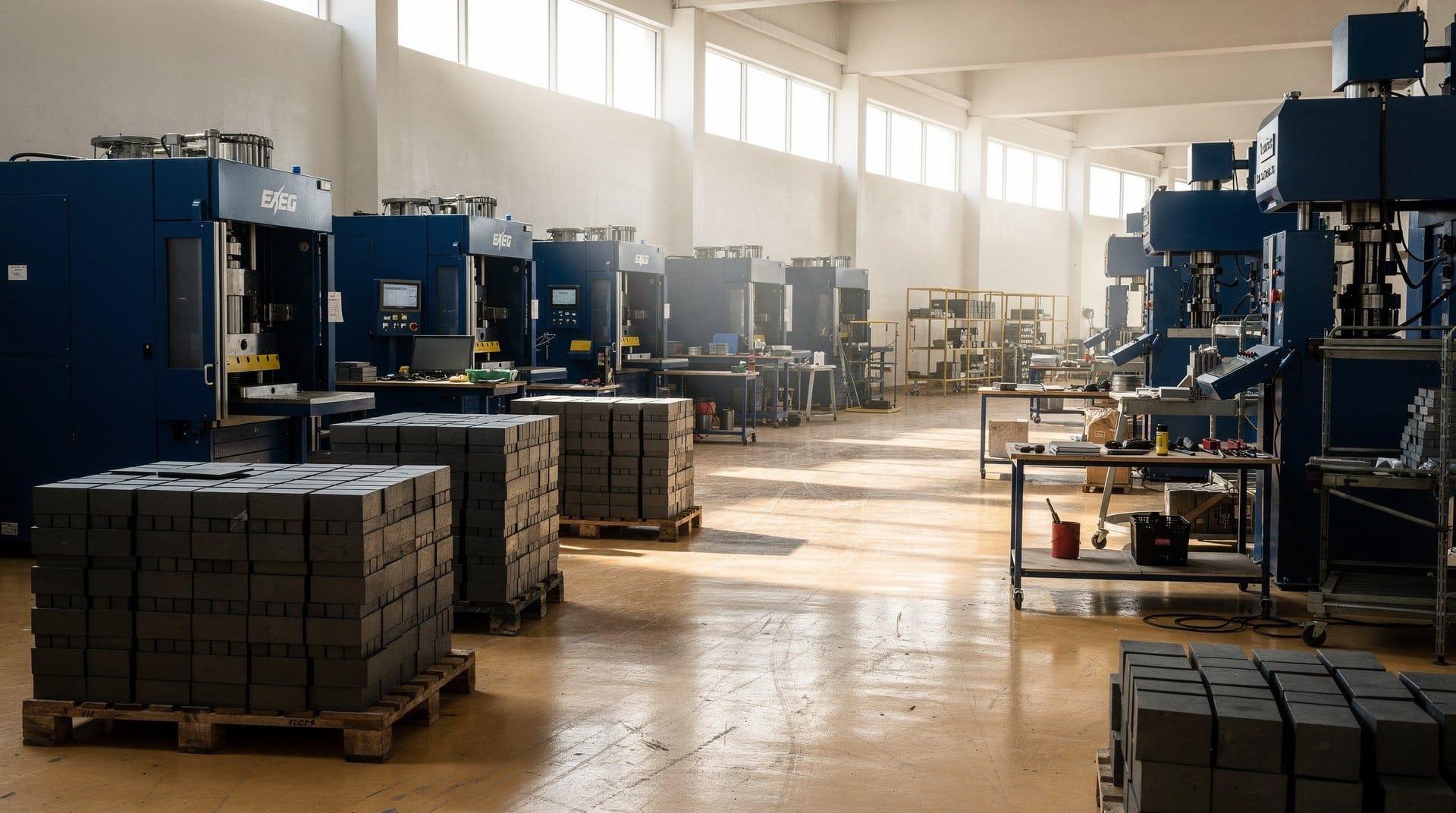
Buried in the Department of War's partnership with MP Materials is a provision that matters more than the dollar figures around it. The agreement establishes a floor price of $110 per kilogram for neodymium-praseodymium, and commits the government to buy the entire output of the company's planned magnet campus in Northlake, Texas, for ten years. That campus carries a $1.25 billion price tag and is meant to add roughly ten thousand metric tons a year of finished magnets when it commissions in 2028.
A price floor is a different instrument than a grant or a loan. It does not fund a factory, it removes the reason not to build one. For two decades the argument against domestic rare earth processing was never geology or engineering, it was that a competitor with lower costs and state backing could drop prices below any Western producer's break-even whenever new capacity appeared. A guaranteed floor makes that threat inoperative for the producer it covers.
From the Battlefield to the Balance Sheet
Permanent magnets are one of those inputs that almost nobody prices consciously and everybody depends on. They sit inside the actuators that move control surfaces, the motors in every electric drivetrain, industrial robots, machine tools, compressors, generators and hard drives. The defense share of that demand is small in tonnage and enormous in consequence, which is exactly the profile of a supply chain that stays vulnerable because no single buyer has the volume to justify fixing it alone.
The response has been to substitute government demand for the missing commercial commitment. Alongside the MP arrangement, USA Rare Earth has a Commerce Department package combining a federal grant of $277 million with up to $1.3 billion in loan capacity, and is working toward a run-rate of six hundred metric tons a year at its Stillwater, Oklahoma plant before a much larger South Carolina facility comes online. Both companies are pursuing the same target of roughly ten thousand tons a year, which taken together would be a genuinely material share of non-Chinese supply. Neither has a mature book of commercial contracts yet, and that gap between announced capacity and signed offtake is the number worth tracking.
The Dual-Use Reality Check
There is almost nothing military about a magnet. The end markets that will absorb this capacity are electric vehicles, industrial automation, heating and cooling equipment, wind generation and consumer electronics, and those buyers currently take a price set overseas with no domestic alternative to negotiate against. A guaranteed floor for the defense-adjacent volume gives a domestic producer the balance sheet to serve commercial customers as well, which is how a national security program ends up changing the cost structure of factory robots.
It also introduces a two-price world worth thinking about carefully. If domestic magnet output is underwritten at a floor while global spot prices sit below it, American manufacturers buying that domestic product may pay more than their offshore competitors for a while. The compensation is availability, and availability has become the scarcer good. Any manufacturer who lived through an export restriction on a critical input already knows what an interrupted supply costs relative to a few dollars a kilogram.
The Capital Signal
The signal is that the government has moved from funding capacity to guaranteeing demand, and guaranteeing demand is the more powerful of the two. A loan still leaves a producer exposed to the price war that killed the last generation of Western processors. An offtake commitment with a floor transfers that specific risk onto the public balance sheet, and it does so for a decade, which is long enough to finance a plant against.
The structural read is that this template will spread. Once a price floor exists for one strategic input, the argument for applying it to others gets easier every time a supply chain gets squeezed, and the categories already receiving federal credit are the obvious candidates. For allocators the near-term question is narrower and more concrete. Announced capacity in this sector has consistently run ahead of delivered tonnage, and the companies worth watching are the ones converting commissioning milestones into shipped product rather than the ones announcing the next facility.
Signal: A guaranteed floor price does what no grant can, which is remove the risk that made domestic magnet production uninvestable in the first place.
Marcus Cole, Top Margin

Someone Else Is Funding Your Copper Mine
In the third week of October a Canadian miner and a Japanese trading house took a final investment decision on a copper

The Battery Found a Better Customer Than the Car
In the third week of October a solid state battery developer announced plans for a hundred megawatt hour cell production line, targeting

The Startup Moved Into the Prime's Factory
In the middle of October a major missile maker announced a three hundred million dollar expansion of its Texas plant, part of

The Chipmaker Became the Refiner's Banker
In the third week of October one of the three large memory manufacturers said it would put strategic funding into a materials
Join The Strategic Reserve
Get encrypted weekly intelligence. No noise, just mission-critical data