
The Government Check as a Bonus, Not the Business Case
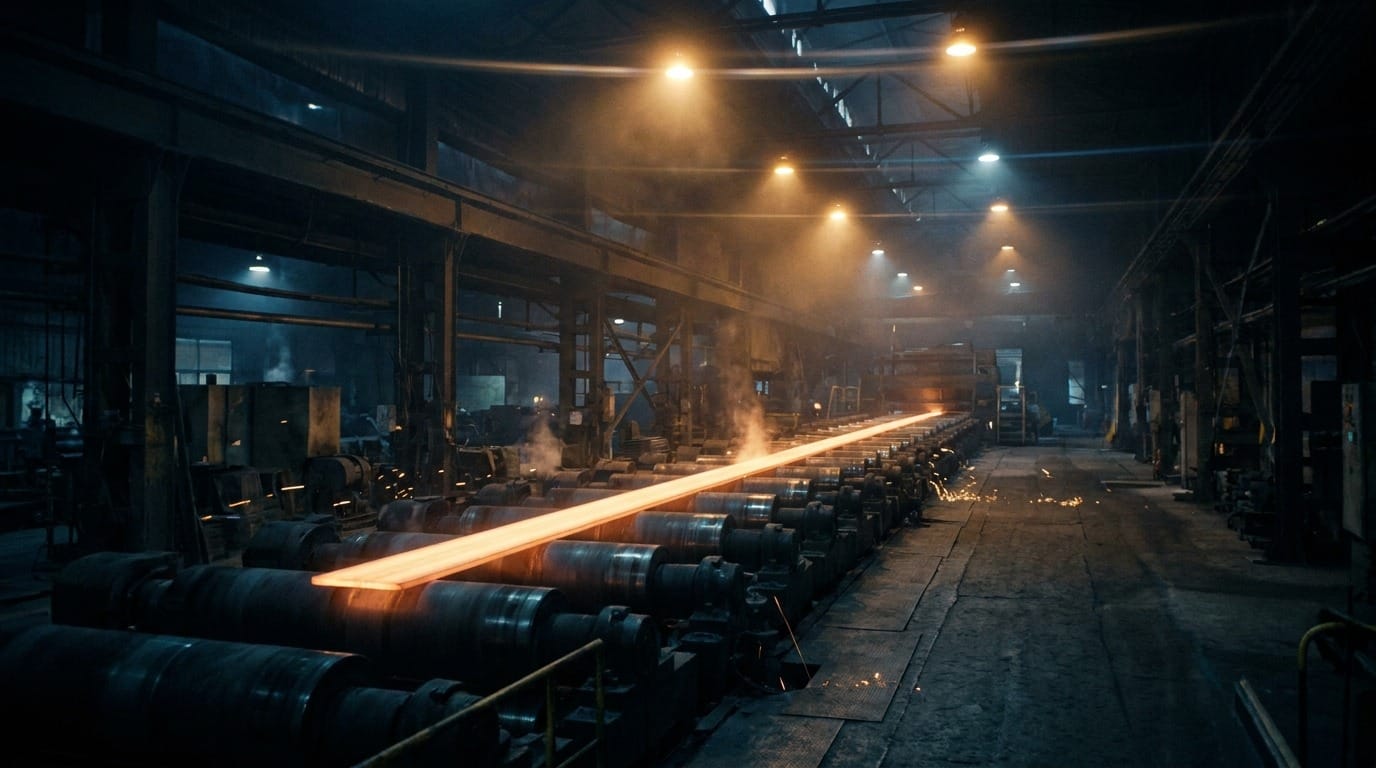
IperionX picked up $47.1 million in Defense Department funding this year to expand its Virginia titanium manufacturing campus sevenfold, targeting 1,400 tons of annual output by mid-2027. Separately, American Titanium Metal announced an $868 million investment in a new 500,000-square-foot
IperionX picked up $47.1 million in Defense Department funding this year to expand its Virginia titanium manufacturing campus sevenfold, targeting 1,400 tons of annual output by mid-2027. Separately, American Titanium Metal announced an $868 million investment in a new 500,000-square-foot North Carolina facility to melt, roll, and finish aerospace-grade titanium domestically, potentially running by 2027. Both projects are chasing the same underlying problem: titanium sponge, the raw feedstock for nearly every titanium alloy used in a jet engine, an airframe, or a submarine hull, has an American supply chain thin enough that a handful of new facilities represent a meaningful share of total planned domestic capacity.
Titanium is not exotic in the way a rare earth magnet or a quantum sensor is exotic, it is a well-understood metal that has simply been cheaper to source from a small number of foreign producers for decades. Rebuilding that capacity domestically is a straightforward industrial policy problem, more forging and refining capacity, but a slow and capital-intensive one, since a titanium melting and finishing facility takes years to permit, build, and qualify for aerospace-grade output. Barron Industries is separately expanding its own titanium investment casting capability, with new pours expected in the fourth quarter of this year, which suggests the buildout is happening across multiple points in the supply chain at once rather than in a single flagship project.
From the Battlefield to the Balance Sheet
A titanium sponge and mill products shortage does not show up as a dramatic headline the way a chip shortage or a missile production gap does, but it quietly constrains every category this newsletter covers that depends on lightweight, high-strength metal: jet engines, hypersonic airframes, submarine components, satellite structures. The $47.1 million DoD investment in IperionX is a relatively small check next to the multi-billion dollar figures elsewhere in this newsletter, but it is targeted at unlocking a sevenfold capacity increase, which is the kind of leveraged outcome that makes a modest government check look different from an equivalent private equity investment. Capital allocators should note that American Titanium Metal's $868 million is entirely private capital, betting that domestic aerospace-grade titanium demand, defense and commercial combined, justifies the investment without needing a guaranteed government offtake contract the way some other reshoring plays in this newsletter have required.
The Dual-Use Reality Check
Titanium's largest end markets by volume are commercial aerospace, medical implants, and industrial chemical processing equipment, not defense, which makes this one of the rare reshoring stories where the civilian demand was already there first and the defense funding is riding alongside an existing commercial market rather than creating one from scratch. A new domestic titanium mill selling into aerospace-grade specifications can supply a commercial airliner manufacturer, a submarine builder, and a medical device company from the same production line, since the qualification standards for aerospace-grade titanium already cover most of what each of those customers needs. That breadth of existing demand is exactly why private capital is willing to fund the North Carolina facility without waiting for a defense contract to de-risk it first.
The Capital Signal
The signal is that not every reshoring story in this newsletter requires a government demand signal to get built, some categories, titanium among them, have deep enough existing civilian demand that private capital moves on its own once the economics of domestic production improve relative to imports. Capital allocators should distinguish between reshoring plays that depend on a continuing government check to pencil out and ones like titanium where commercial demand alone can sustain the investment, because the latter is a more durable bet if government priorities or budgets shift in the years these facilities take to come online. A facility funded because three separate industries need the same metal is harder to defund than one that only has a single government customer.
Signal: The most durable reshoring bets are the ones commercial demand alone can justify, with the government check as a bonus rather than the entire business case.
Marcus Cole, Top Margin

Drone Defense Is a Cost Curve Problem
At the start of July the Army awarded AeroVironment a contract worth up to $500 million over three years, through Army Contracting
The Missile Ramp Runs Through the Motor Supplier
The Navy awarded a seven-year contract worth about $22.9 billion in mid-August to lift Tomahawk cruise missile production from
Repair Capacity Comes Before Hull Count
A presidential memorandum issued in mid-August directs the Department of War to restore capacity and competition to the maritime industrial base,
One Autonomy Stack, Two Economies
A publicly traded autonomous trucking company now sits inside three separate military ground vehicle efforts. It holds a Marine Corps contract to
Join The Strategic Reserve
Get encrypted weekly intelligence. No noise, just mission-critical data