
The Fuel Nobody Budgets For
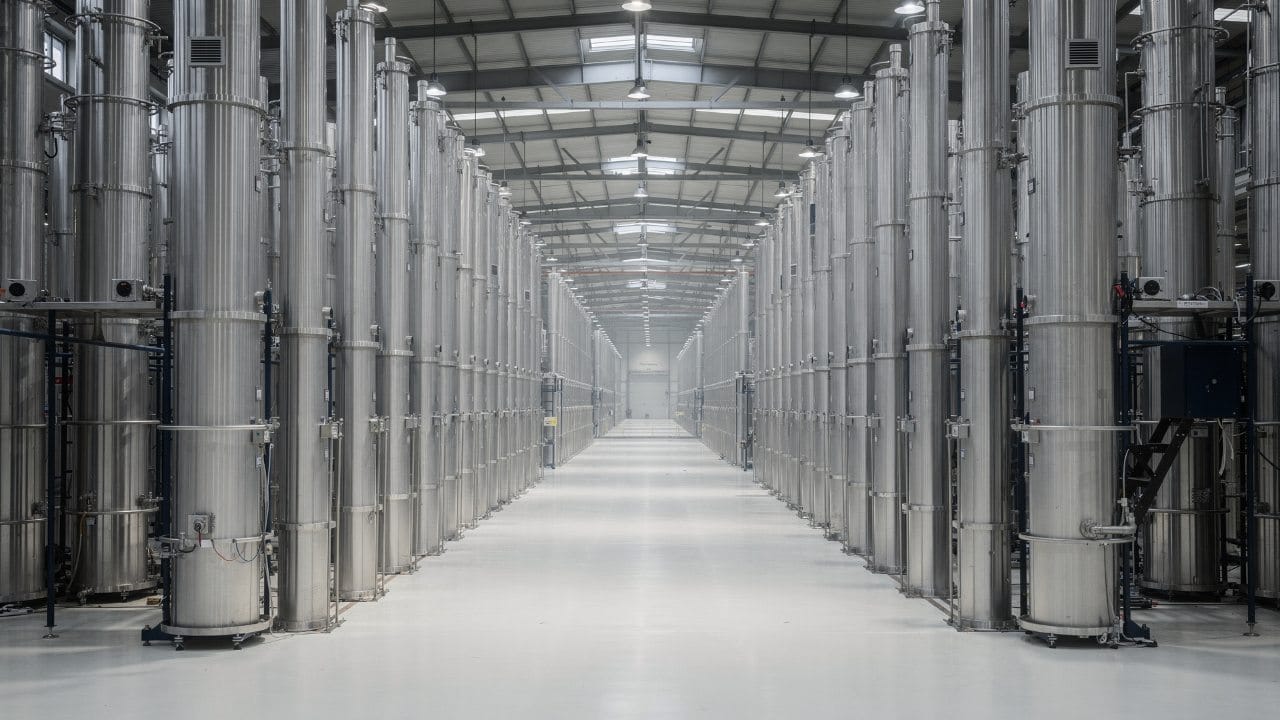
In the middle of October the operator of the only commercial uranium enrichment plant in the United States said production had started in the sixth of eight new centrifuge cascades at its site in New Mexico, putting the expansion three quarters complete. The seventh is due
In the middle of October the operator of the only commercial uranium enrichment plant in the United States said production had started in the sixth of eight new centrifuge cascades at its site in New Mexico, putting the expansion three quarters complete. The seventh is due before the end of this year and the eighth in the spring.
The whole expansion adds about seven hundred thousand separative work units. The company then plans to refurbish its existing cascades from next year, and to start building an entirely new plant in 2029 that would add two point one million more, with the first of those cascades producing in 2032 and installation continuing to 2036.
From the Battlefield to the Balance Sheet
A separative work unit is the unit of enrichment effort, and it is the right way to think about this industry because it is a measure of capacity rather than of output. Centrifuge enrichment is the purest example of a capital business there is. The machines run continuously for decades, the marginal cost of operation is small, and essentially all of the economics sit in how many machines you have and when you installed them.
That produces a supply curve that does not respond to price on any useful timescale. The plant announced this month began installing in 2025 and finishes in 2027 for the first tranche, and the follow on plant starts construction three years from now and is still being built a decade out. Nothing about higher uranium prices or a new policy makes a cascade spin sooner.
Set that against the demand side. Every reactor life extension, every uprate, every small modular reactor announcement and every microreactor contract on a military installation assumes fuel, and none of them come with fuel attached. The announcements have been arriving monthly. The capacity to enrich for them is arriving across eleven years.
The strategic layer makes it tighter. Western utilities have spent three years trying to displace Russian enrichment from their supply, which raised demand for Western separative work without raising the number of centrifuges. The shortfall has been covered by inventory and by underfeeding, both of which are ways of borrowing from a future that is now arriving.
The Dual-Use Reality Check
Enrichment is the textbook dual-use technology and it is regulated as such, which is exactly why new entry is so slow. The centrifuge designs are controlled, the sites are licensed under international safeguards, and the number of organisations permitted to operate them anywhere in the Western world is small. This is not a market where capital alone produces capacity.
The civil and military sides share the industrial base without sharing the product. Commercial reactors take low enriched material, naval reactors and some advanced designs need far higher assays, and the equipment and expertise behind both are the same. A country that lets its commercial enrichment base shrink finds that the naval and advanced reactor programmes have nowhere to buy from, which is the argument that has been made in Washington for a decade and is only now being funded.
The honest caveat is that this is one company at one site. A single domestic supplier is better than none and considerably worse than a market.
The Capital Signal
The capital signal is that enrichment capacity is being added on a schedule set by physics and licensing rather than by demand, and the demand curve crossed the supply curve some time ago. That is a durable price environment for anyone holding capacity, and a durable cost problem for anyone who needs fuel and has not contracted for it.
The structural read is to ask every nuclear announcement where its fuel comes from and whether it is under contract. A utility with long term enrichment contracts has removed a risk its peers are carrying. A developer announcing a reactor for the early 2030s without a fuel arrangement has an unpriced exposure to a market with one domestic supplier and a decade of lead time. Watch for new entrants being licensed rather than announced, and watch the contracting of advanced assays in particular, because that is the thinnest part of the market and the part the newest designs depend on.
Signal: Enrichment capacity arrives on an eleven year schedule while reactor announcements arrive monthly, and only one company makes it domestically.
Marcus Cole, Top Margin

The Chipmaker Became the Refiner's Banker
In the third week of October one of the three large memory manufacturers said it would put strategic funding into a materials

The Ten Year Order Buys Certainty, Not Jets
In late October the Pentagon and the prime contractor behind the F-35 agreed on a framework covering at least eight hundred
China Is Selling Access, Not Metal
Two things happened to rare earth supply in the second week of October. European and Chinese trade officials met in Beijing and
The Constellation Has a Disposal Bill
In early October the agency building the military's low orbit satellite architecture did something new. It awarded a combined eight
Join The Strategic Reserve
Get encrypted weekly intelligence. No noise, just mission-critical data