
The Constellation Has a Disposal Bill
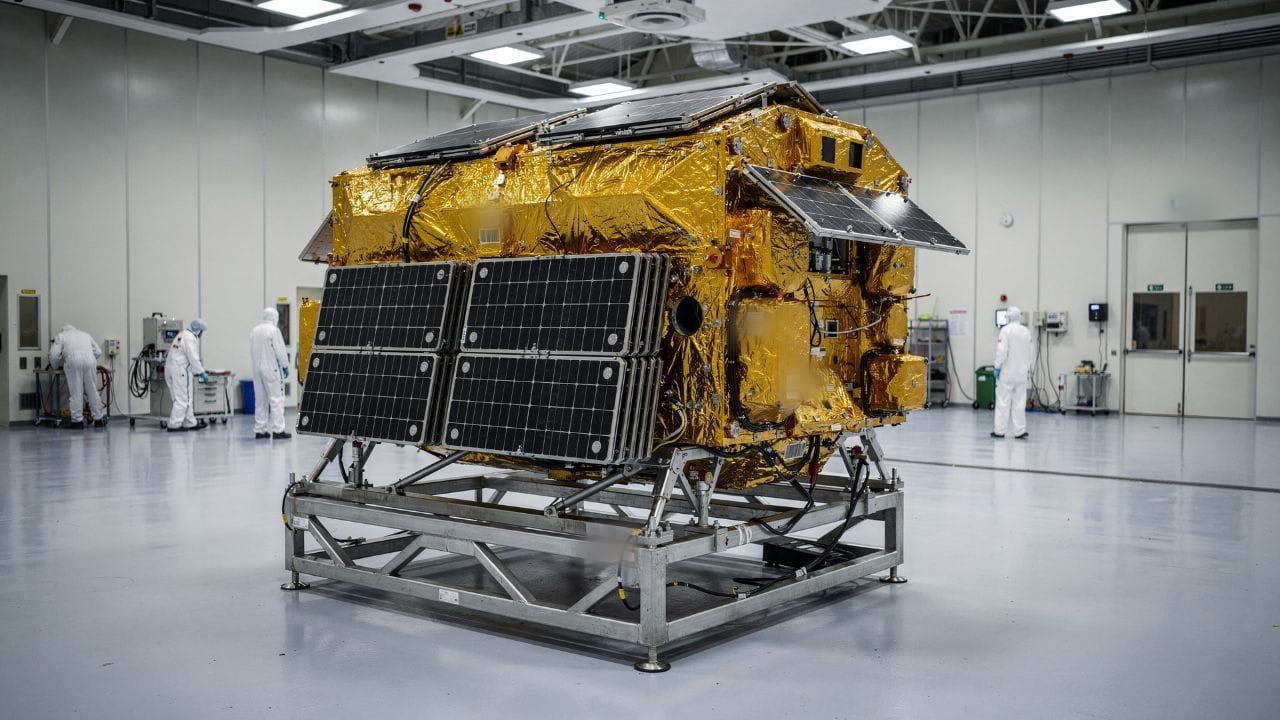
In early October the agency building the military's low orbit satellite architecture did something new. It awarded a combined eight point four million dollars to three companies for designs of a vehicle that can rendezvous with a dead satellite and bring it down, and
In early October the agency building the military's low orbit satellite architecture did something new. It awarded a combined eight point four million dollars to three companies for designs of a vehicle that can rendezvous with a dead satellite and bring it down, and a separate contract worth up to fifty two and a half million to a fourth company to dispose of as many as seven of its own spacecraft using an existing servicing vehicle.
Design reviews are due by the end of this year, a single contractor is to be chosen to fly a prototype by the middle of 2028, and in the same week the agency launched the first twenty one satellites of a batch that is running about a year behind its original schedule.
From the Battlefield to the Balance Sheet
That second contract is the interesting one, because it is the first public price for taking a military satellite out of orbit. Up to fifty two and a half million dollars for up to seven spacecraft is a ceiling rather than a unit price, and the actual figure will be lower, but it establishes that disposal is now a line item with a number attached rather than an assumption.
A proliferated constellation is a fleet, and fleets have operating economics that single exquisite satellites never had. The old model put up a handful of very expensive spacecraft designed to last fifteen or twenty years, and end of life was a fuel reserve and a graveyard orbit. The new model puts up hundreds of cheap ones on a five year design life, which means a replacement cycle, a continuous launch cadence, and a continuous retirement problem. The second and third of those are rarely in anybody's model.
The failure case is what forces the issue. A satellite that dies with its propulsion working can take itself down. One that dies suddenly cannot, and in a crowded orbital shell a derelict is a hazard to the constellation that owns it. At a few hundred spacecraft with ordinary reliability, several will fail in a way that leaves them stuck, every year, forever. Buying a service to remove them is cheaper than losing working satellites to collisions.
The schedule slip in the same week is the other half of the story. An architecture planned to be complete by last summer now finishes next spring, which stretches the replacement clock for everything already up there.
The Dual-Use Reality Check
This is a civil business that defense is paying to create, and the market behind it is far larger than the military one. Commercial constellations in low orbit now number in the thousands, insurers are pricing collision risk, and regulators in several jurisdictions have been tightening post mission disposal rules for years. A vehicle that can capture an uncooperative satellite serves all of that.
The same hardware does other things too, which is the part that makes the economics work. Rendezvous, proximity operations and capture are the basis of refuelling, of orbital tugs, of inspection and of life extension, and a company that can do one can sell the others. That is why the names in these awards are mostly servicing companies rather than disposal specialists.
It is also, unavoidably, the technology of approaching somebody else's satellite. That dual nature is why the capability gets funded quickly and why it will be watched closely.
The Capital Signal
The capital signal is that in orbit servicing has found its anchor customer, and it is not a commercial operator trying to extend an asset's life. It is a government buying rubbish collection for a constellation it is still building.
The structural read is to add a disposal and replacement line to any proliferated constellation you are valuing. A fleet on a five year design life needs to be bought roughly every five years and cleaned up continuously, and the published programme cost usually covers the first build and nothing after it. Watch which design wins the prototype selection, because the first vehicle to demonstrate capture of an uncooperative target in orbit will set the standard for a decade of commercial work. Watch too whether the schedule holds, since a programme already a year late on launch is unlikely to be early on the part nobody is measuring.
Signal: Satellite disposal now has a contract and a price, and any proliferated constellation carries a replacement and clean-up cost its headline budget leaves out.
Marcus Cole, Top Margin

The Chipmaker Became the Refiner's Banker
In the third week of October one of the three large memory manufacturers said it would put strategic funding into a materials

The Ten Year Order Buys Certainty, Not Jets
In late October the Pentagon and the prime contractor behind the F-35 agreed on a framework covering at least eight hundred

China Is Selling Access, Not Metal
Two things happened to rare earth supply in the second week of October. European and Chinese trade officials met in Beijing and
The Cheapest Shot Is Not a Missile
At the Army's big trade show in the middle of October one of the primes showed a layered air defense
Join The Strategic Reserve
Get encrypted weekly intelligence. No noise, just mission-critical data