
The Drone Bottleneck Was Never the Airframe
A drone manufacturer in Huntsville, Alabama received a conditional federal loan commitment of up to $820 million at the end of July, and the interesting part is what the money is for. It is not for finished aircraft. It funds facilities, manufacturing infrastructure and equipment to
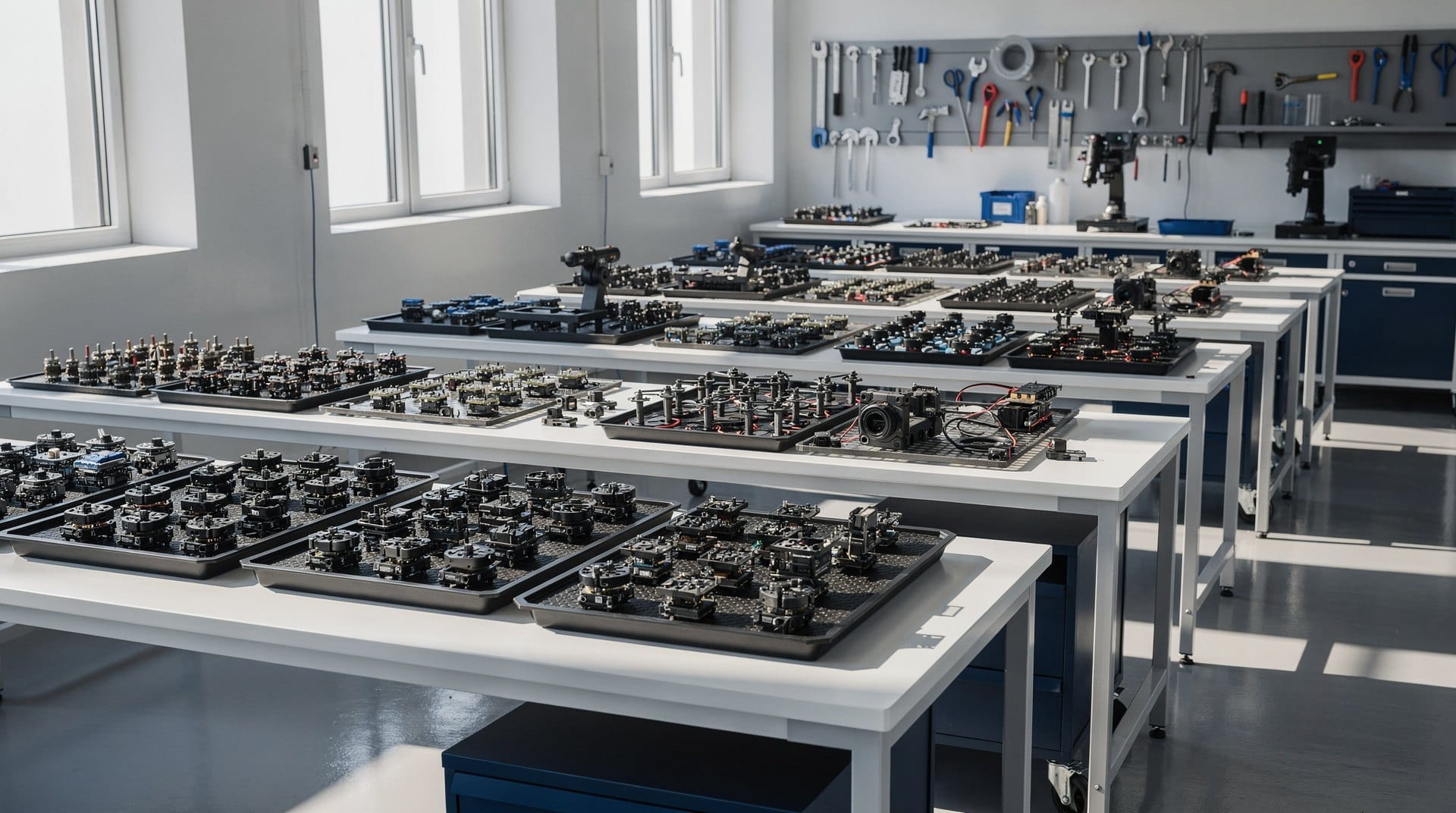
A drone manufacturer in Huntsville, Alabama received a conditional federal loan commitment of up to $820 million at the end of July, and the interesting part is what the money is for. It is not for finished aircraft. It funds facilities, manufacturing infrastructure and equipment to produce propulsion, power and control, and vision systems for the small unmanned aircraft that weigh under fifty-five pounds. The company builds drones, but the loan is aimed at the parts inside them.
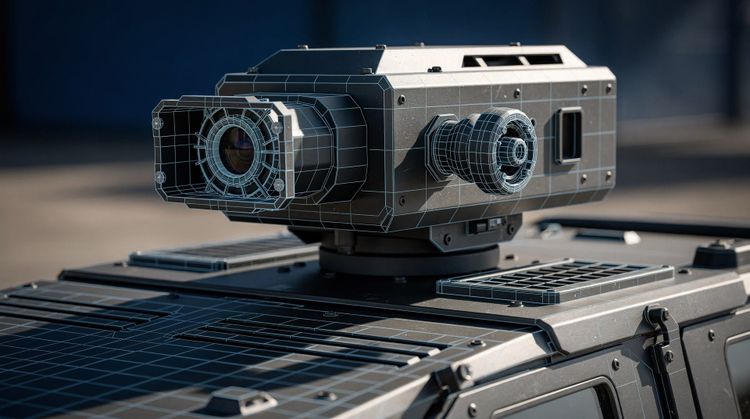
That framing tells you where the actual constraint sits. Airframes are not hard to make in volume in the United States. Motors, flight controllers, batteries, radios and camera modules are, because China built the deepest component supply chain in the world around a drone market worth well over ten billion dollars, and American assemblers have been buying from it for a decade.
From the Battlefield to the Balance Sheet
Every serious projection of military drone demand assumes mass, and mass means the unit economics have to work at production rates that no defense assembler has ever run. That is a component problem long before it is an airframe problem, because the bill of materials on a small drone is dominated by motors, cells and optics rather than by structure. If those parts have to be sourced domestically at low volume, the cost per unit stays high enough to defeat the entire premise of cheap scalable mass.
The policy calendar is what makes this urgent rather than aspirational. The current defense authorization act bars the department from buying batteries built with materials from foreign entities of concern starting at the beginning of 2028, which sets a hard date by which a domestic cell supply for drones has to exist or the procurement plans behind it do not. A loan sized in the hundreds of millions against a single component maker is not generosity, it is the government pricing the cost of hitting that deadline. For allocators, the readable signal is that federal money is moving down the stack, away from platform primes and toward the suppliers whose absence would stall the platforms.
The Dual-Use Reality Check
Small aircraft propulsion, power management and machine vision are not defense-specific technologies in any meaningful way. The same brushless motors and controllers turn up in industrial robotics and agricultural equipment. The same vision modules go into warehouse automation, inspection drones and driver assistance systems. The same cell chemistry and battery management work goes into power tools, e-mobility and grid-edge storage. A domestic plant built to keep military drones flying is a domestic plant that can sell into all of it.
That matters because the civilian drone economy in the United States has been quietly hostage to the same supply chain. Utilities inspecting transmission lines, farms doing aerial survey work, construction firms running site scans and public safety agencies all buy hardware whose component base is concentrated offshore, and procurement restrictions have been steadily narrowing what they are allowed to use. Building the component layer domestically does not just serve a military requirement, it re-opens a set of civilian applications that regulation had been closing off. That is the sort of second-order effect that is easy to miss when a headline reads as a defense story.
The Capital Signal
Capital is flowing to the component layer, and it is flowing as credit rather than as procurement. That combination says the government has concluded it cannot simply order its way to drone mass, because the suppliers who would fill the order do not exist at the required scale and will not be built on contract awards alone. Lending against plant and equipment is what you do when the missing thing is capacity rather than product.
The structural read is that the value in domestic drone production is likely to concentrate upstream of the airframe, in the small number of firms that end up owning motor, power and optics manufacturing at volume. Airframe assembly is competitive and will stay competitive, since the barriers there are low and the field is crowded. The component lines being financed now are the ones with real switching costs once they are qualified into programs, and qualification is slow, which is exactly what makes an incumbent position there durable.
Signal: The money is going into what is inside the drone, not the drone, and that is where the durable positions will be.
Marcus Cole, Top Margin
Drone Defense Is a Cost Curve Problem
At the start of July the Army awarded AeroVironment a contract worth up to $500 million over three years, through Army Contracting
The Missile Ramp Runs Through the Motor Supplier
The Navy awarded a seven-year contract worth about $22.9 billion in mid-August to lift Tomahawk cruise missile production from
Repair Capacity Comes Before Hull Count
A presidential memorandum issued in mid-August directs the Department of War to restore capacity and competition to the maritime industrial base,
One Autonomy Stack, Two Economies
A publicly traded autonomous trucking company now sits inside three separate military ground vehicle efforts. It holds a Marine Corps contract to
Join The Strategic Reserve
Get encrypted weekly intelligence. No noise, just mission-critical data