
The Asymmetric Trap: How Cheap Tech is Bankrupting Legacy Defense
As asymmetric drone warfare disrupts the global maritime trade routes that sustain our legacy supply chains, a historic reallocation of federal capital is quietly unfolding. Savvy investors are pivoting their wealth away from the vulnerable multinational shipping models of the past and toward agile domestic technology
As asymmetric drone warfare disrupts the global maritime trade routes that sustain our legacy supply chains, a historic reallocation of federal capital is quietly unfolding. Savvy investors are pivoting their wealth away from the vulnerable multinational shipping models of the past and toward agile domestic technology firms. These modern companies are building the automated industrial infrastructure of the future, ensuring supply chain sovereignty for the American economy.
The Asymmetric Trap and the End of the Globalist Supply Chain
For many decades, the foundation of the modern global economy rested on a very simple idea that international maritime chokepoints would remain permanently open to smooth commercial trade. This basic belief allowed multinational corporations to outsource their manufacturing to distant shores without worrying about the severe logistical consequences. Today, that foundational assumption has completely collapsed under the weight of a new, highly disruptive economic reality, making the old models of international logistics rapidly becoming uninsurable liabilities. Scattered groups of hostile actors now leverage incredibly cheap, commercially derived technology to paralyze the vital waterways that carry our energy and consumer goods. We are witnessing a structural shift in how global power is projected, requiring savvy investors to rethink their entire approach to market risk.
These disrupted trade routes drive up freight costs and inject severe inflationary pressures directly into the domestic economy, creating a massive headwind for traditional retail businesses. When a scattered network of hostile actors can deploy basic scrap-metal drones to hold back premier American strike groups, the fundamental mathematics of global security change forever. This is not merely a temporary geopolitical issue that will eventually settle back into the comfortable globalization of the past, but rather a calculated war of financial attrition. This strategy is designed to make the continuous protection of overseas supply chains an economically unsustainable burden for Western nations. By forcing commercial shipping conglomerates to abandon traditional routes in favor of massive detours, these asymmetric tactics have successfully engineered a persistent supply chain crisis.
The Obsolescence Warning: Why Legacy Defense is a Toxic Asset
To truly grasp the magnitude of this capital migration, we must first issue the Obsolescence Warning, which clearly explains how cheap technology instantly devalues classic military assets. For generations, the American defense industrial base operated on a model of exquisite, slow-moving perfection that rewarded legacy giants for building massive, highly complex platforms. These outdated systems require astronomical operational budgets just to remain afloat, making them incredibly inefficient in the modern era of rapid technological change. However, when these magnificent vessels are deployed to contested waterways, they are immediately trapped in an unwinnable mathematical equation that drains federal resources. They are forced to expend incredibly scarce, premium interceptor missiles simply to destroy incoming hostile drones that cost a tiny fraction of that price.
This highly unfavorable cost-exchange ratio is the ultimate asymmetric warfare trap, because hostile actors do not actually need to sink a massive warship to achieve their strategic goals. They simply need to bleed the federal defense budget dry by forcing the military to exhaust its premium munitions on expendable, low-cost threats. Every time an advanced interceptor successfully launches to vaporize a cheap enemy drone, the tactical victory masks a profound financial defeat that alarms macroeconomic analysts. This highlights the glaring inefficiencies of a legacy defense model that was never designed for high-volume, low-cost saturation attacks, creating a massive vulnerability. As these premium missile stockpiles are rapidly depleted in distant theaters, the Pentagon is forced into a logistical nightmare that threatens our broader strategic posture.
The Historic Capital Migration Toward Venture Defense
As the Pentagon actively reallocates massive federal capital away from the toxic assets of legacy giants, we are witnessing a historic capital migration that fundamentally redefines the modern defense industrial base. The military establishment has finally recognized that you cannot defeat a high-volume, software-driven swarm with slow-moving hardware, prompting a massive pivot toward advanced electronic warfare. These modern systems, which include directed energy weapons and decentralized autonomous networks, can intercept threats at a fraction of the cost. This vital shift saves the national treasury from financial exhaustion while creating new avenues for wealth generation for those who understand the trend. This is exactly where modern venture defense firms, such as Anduril, are capturing unprecedented market share by delivering solutions that actually work.
These agile innovators bypass the bureaucratic sluggishness of the old guard to deliver software-defined, layered defensive shields that protect our critical assets. They utilize artificial intelligence to instantly track, categorize, and neutralize massive waves of simultaneous threats, ensuring that our forces are never overwhelmed. Instead of relying solely on expensive kinetic interceptors, these technology companies are outfitting the fleet with integrated sensor networks that seamlessly share target data. This shared data flows across the air, surface, and space domains, allowing commanders to blind enemy guidance systems with powerful electronic jamming. This software-first approach completely flips the asymmetric cost equation back in America's favor, ensuring that defensive countermeasures are cheaper and infinitely more scalable.
The Dual-Use Pivot and the Automation of the Civilian Economy
The true brilliance of this technological revolution lies in the dual-use pivot, which explicitly connects these advanced military technologies to their future role in automating the civilian economy. This vital connection serves as a powerful hedge against chronic labor shortages and supply chain inefficiencies, creating massive value for domestic industries. The exact same artificial intelligence algorithms are currently being engineered to instantly identify, track, and coordinate responses against massive drone swarms in contested environments. These highly capable systems possess immense commercial value when applied to the complexities of domestic logistics, allowing companies to streamline their operations. When you strip away the kinetic weaponry, a software system capable of managing autonomous vehicles in a chaotic zone is perfectly suited for civilian use.
This advanced technology can easily manage the intricate, high-speed operations of a modern commercial shipping port, transforming how goods are moved and distributed across the homeland. As the American economy continues to grapple with an aging workforce and a severe lack of skilled industrial labor, this technological shift becomes absolutely vital. The commercialization of these military-grade tracking and automation platforms offers a lifeline to domestic manufacturers who are desperately trying to scale their operations efficiently. By integrating these advanced sensor networks into civilian warehouses and freight yards, corporations can achieve unprecedented operational efficiency, driving massive profits. This strategic integration allows them to dramatically increase their output without relying on a massive influx of human capital, solving a major economic bottleneck.
Supply Chain Sovereignty and the Fortress America Reality
As the vulnerabilities of international maritime trade become increasingly impossible to ignore, the strategic imperative for **Fortress America** transitions into an absolute economic necessity. This profound urgency is driving a historic reshoring movement that will permanently redefine global commerce, shifting power back to domestic producers. The persistent disruption of overseas shipping lanes by asymmetric actors has conclusively proven that relying on distant factories is a recipe for severe economic disruption. This stark reality is forcing corporate boards to drastically re-evaluate their geographic risk profiles, leading them to abandon fragile international networks. Consequently, we are witnessing a massive repatriation of manufacturing capabilities back to North America, ensuring that our supply chains remain secure. Companies realize that the only way to guarantee the delivery of their products is to build them within the secure borders of the domestic market.
This profound shift toward supply chain sovereignty requires an astronomical investment in domestic infrastructure, power generation, and advanced manufacturing facilities nationwide. It creates a massive vacuum for capital, currently filled by forward-thinking investors who understand the permanence of this post-globalist reality. When the cost of insuring a cargo vessel transiting a contested waterway exceeds the profit margin of the goods it carries, the economic argument for cheap foreign labor completely disintegrates. This fundamental change makes highly automated domestic production the only viable path forward for serious industrial players who want to maintain their market share. Furthermore, the federal government is actively accelerating this transition through targeted incentives and strategic investments, ensuring that the momentum continues to build.
The Fortress Action: Aligning Wealth with Industrial Resurgence
Navigating this massive capital pivot requires more than passive observation; it demands the Fortress Action, the clear, empowering investment step you must take. This vital action aligns your legacy wealth with American sovereign industrial strength, ensuring that your portfolio thrives in the new economic landscape. The era of blindly investing in multinational conglomerates that depend on fragile, deeply compromised overseas supply chains is rapidly coming to a definitive close. The hidden costs of maritime volatility and asymmetric warfare erode their profit margins and expose their structural weaknesses to the broader market. To protect your portfolio from the inflationary fallout of these disrupted trade routes, you must actively migrate your capital away from the toxic assets of the past. You must deliberately position your wealth within the agile sectors driving the domestic resurgence, capturing the upside of this historic transition.
This strategic move means seeking out the venture-backed technology firms that are pioneering the software-defined defense systems of the future, such as Palantir. It also means identifying advanced manufacturing companies that are successfully executing the dual-use pivot to automate our civilian infrastructure and address labor shortages. By focusing your resources on enterprises building resilient, localized supply chains, you are effectively front-running a massive wave of institutional capital. These large institutional investors are just beginning to recognize the permanence of this post-globalist reality, which means early movers will reap the greatest rewards. These are the innovative companies that will thrive regardless of what happens in distant, contested waterways, because their value is derived entirely from domestic solutions. Their ability to solve complex logistical and security challenges right here at home makes them the most reliable growth engines of the next decade.
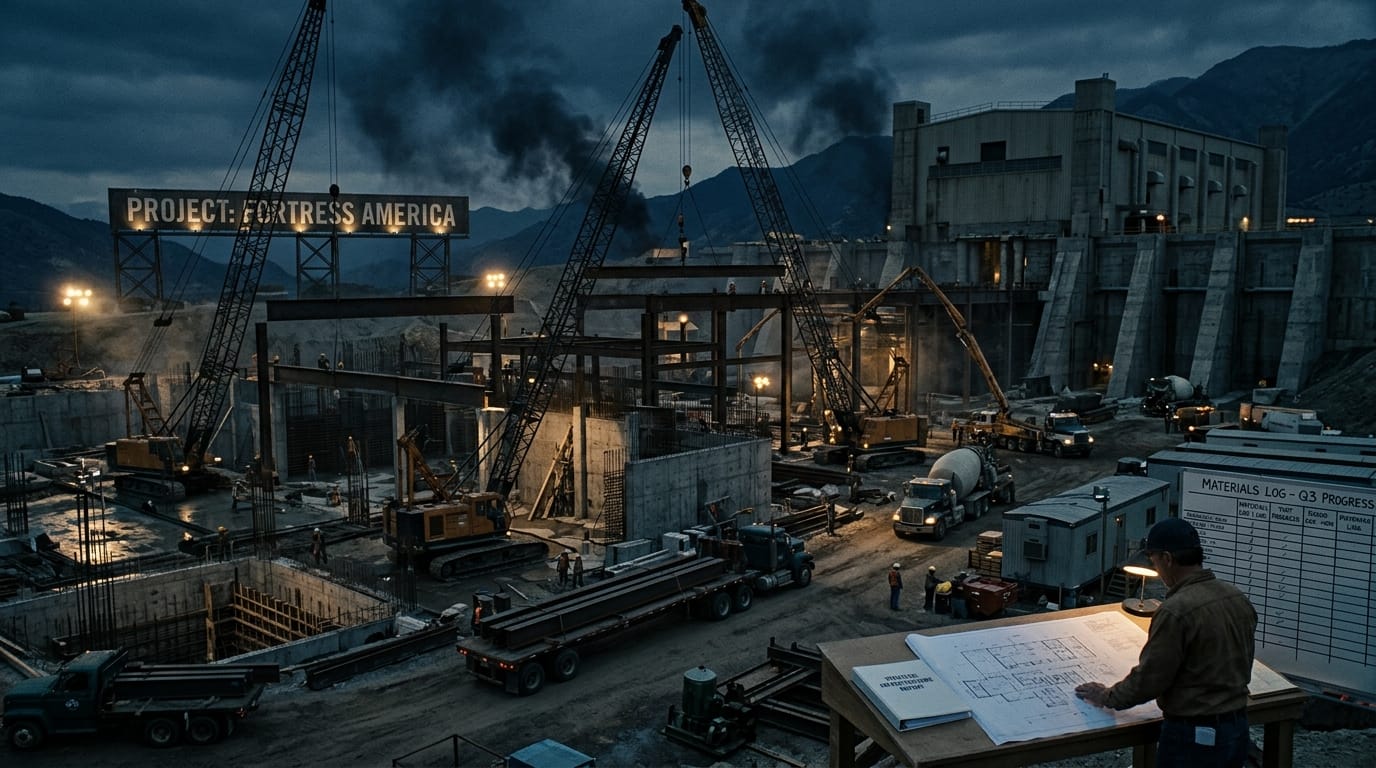

Drone Defense Is a Cost Curve Problem
At the start of July the Army awarded AeroVironment a contract worth up to $500 million over three years, through Army Contracting
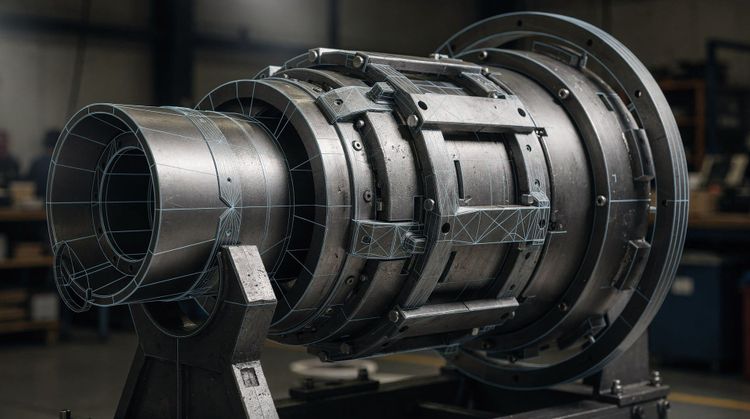
The Missile Ramp Runs Through the Motor Supplier
The Navy awarded a seven-year contract worth about $22.9 billion in mid-August to lift Tomahawk cruise missile production from

Repair Capacity Comes Before Hull Count
A presidential memorandum issued in mid-August directs the Department of War to restore capacity and competition to the maritime industrial base,
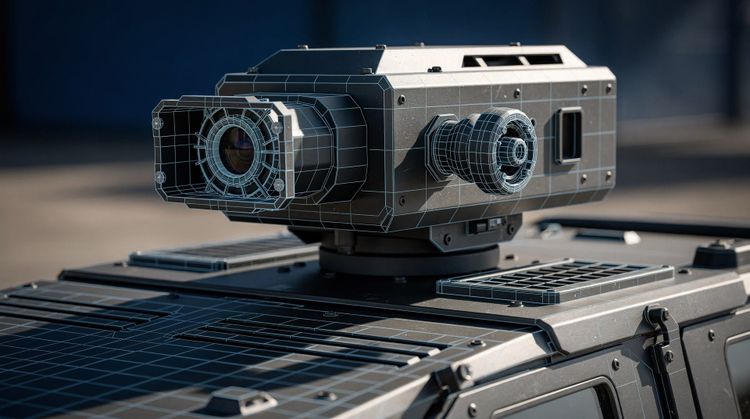
One Autonomy Stack, Two Economies
A publicly traded autonomous trucking company now sits inside three separate military ground vehicle efforts. It holds a Marine Corps contract to
Join The Strategic Reserve
Get encrypted weekly intelligence. No noise, just mission-critical data