
Orbit Is Becoming a Scheduled Service
The Space Force awarded SpaceX $1.6 billion this year for 18 Falcon 9 launches through 2027, carrying satellites tied to sensing and missile tracking, while Rocket Lab picked up a separate $266 million multi-launch contract and a $5.6 billion ceiling award alongside Stoke
The Space Force awarded SpaceX $1.6 billion this year for 18 Falcon 9 launches through 2027, carrying satellites tied to sensing and missile tracking, while Rocket Lab picked up a separate $266 million multi-launch contract and a $5.6 billion ceiling award alongside Stoke Space for a new procurement lane running through 2029. Seven companies now sit inside that lane, SpaceX, United Launch Alliance, Blue Origin, Rocket Lab, Stoke Space, Firefly Aerospace, and Relativity Space, competing for national security launches under a structure built explicitly to look and move like a commercial procurement process rather than a traditional defense acquisition program.
Every satellite constellation this newsletter has covered this year, Golden Dome's missile trackers, the Andromeda space domain awareness fleet, commercial broadband and imaging constellations, needs a rocket to actually reach orbit, and for most of the history of American national security space, that meant a small handful of expensive, low-cadence launch vehicles. Reusability changed the unit economics enough that the Space Force can now run a genuine multi-vendor marketplace instead of locking into one or two providers for a decade at a time. Rocket Lab's first launch under its new Space Force contract is not expected before the end of this year, a reminder that even a fast-moving procurement lane still runs on real hardware schedules, not press release timing.
From the Battlefield to the Balance Sheet
A launch procurement lane with seven qualified vendors is the clearest evidence yet that reusable rocket technology has turned launch from a scarce, planned-years-in-advance resource into something closer to a scheduled service that can be bought in bulk and reordered as satellite production accelerates. That matters enormously for every other category this newsletter tracks that depends on getting hardware into orbit, because a constellation that needs dozens of replenishment launches a year cannot exist if launch capacity is the bottleneck, and it increasingly is not. Capital allocators should read the growing vendor list and the size of the awards, not as evidence of waste from redundant contracts, but as the government deliberately building enough launch supply to match the satellite production surge it is funding everywhere else.
The Dual-Use Reality Check
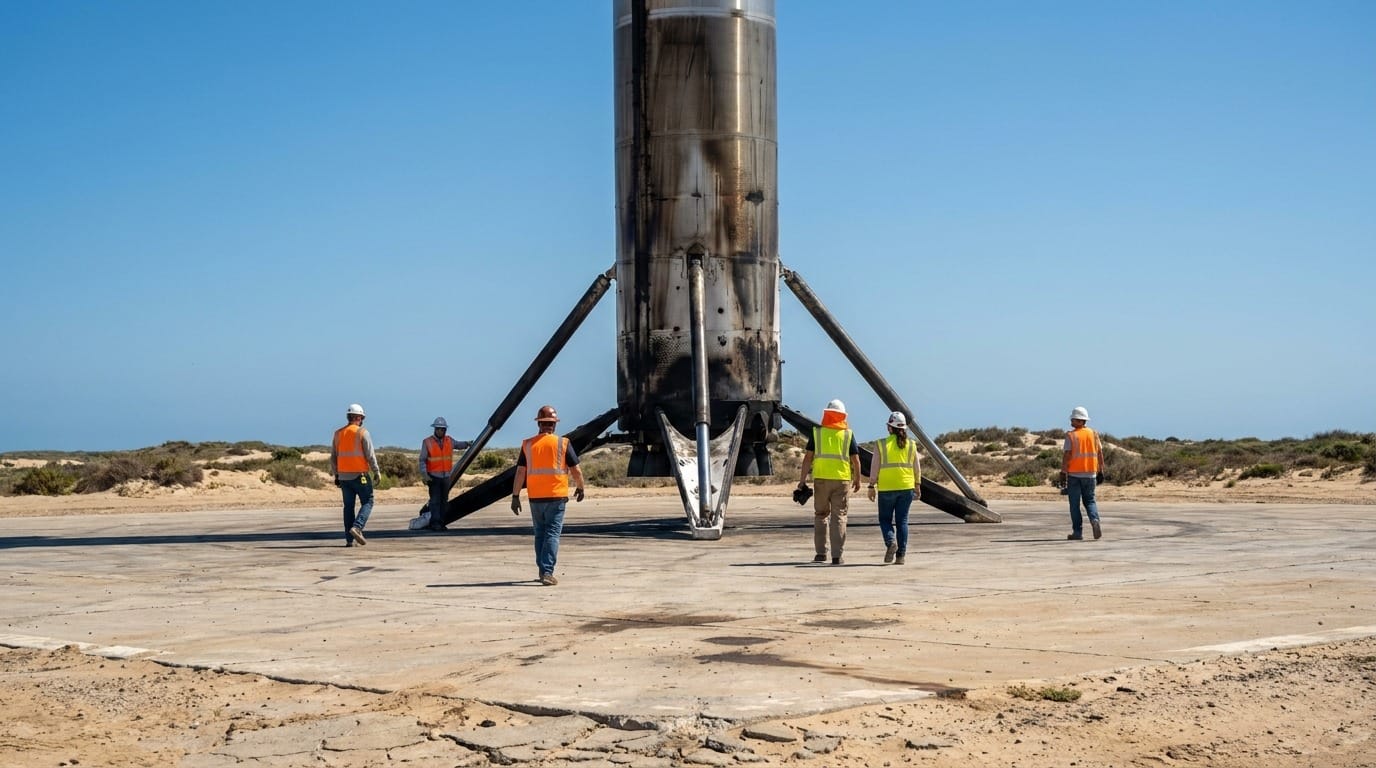
National security launches ride on the exact same reusable rocket hardware, Falcon 9, Rocket Lab's Neutron, Stoke Space's fully reusable vehicle, that these companies fly for commercial satellite operators, scientific missions, and increasingly private space stations, and the launch cadence a national security customer demands pushes providers to fly more often and drive costs down for every other customer riding the same rocket fleet. A Falcon 9 launching an 18-mission government contract flies on the same production line and often literally the same reused booster hardware as a commercial broadband satellite launch, which means military demand for reliable, frequent launch service is subsidizing the fixed costs that make commercial launch cheaper for every other customer in line behind it.
The Capital Signal
The signal is that launch has stopped being the scarce, bespoke resource it was for most of the space age and has become a competitive, multi-vendor commodity service, which changes how capital should value companies in this category. A launch provider's value increasingly rests on cadence and reliability at scale rather than any single contract win, since the government has made clear it will keep multiple vendors alive and reward whoever can fly most often and most predictably. Capital allocators should watch flight cadence and on-time delivery across this expanding vendor pool as the metric that actually separates winners, the same production-throughput lens this newsletter has applied to drones, satellites, and munitions all year. A provider that wins a large contract but cannot fly it on schedule is, for the purposes of this market, no better than one that never won the contract at all.
Signal: Getting to orbit used to be the hard part, now it is becoming a scheduled service, and that shift is what makes every other satellite story in this newsletter possible.
Marcus Cole, Top Margin

Drone Defense Is a Cost Curve Problem
At the start of July the Army awarded AeroVironment a contract worth up to $500 million over three years, through Army Contracting
The Missile Ramp Runs Through the Motor Supplier
The Navy awarded a seven-year contract worth about $22.9 billion in mid-August to lift Tomahawk cruise missile production from

Repair Capacity Comes Before Hull Count
A presidential memorandum issued in mid-August directs the Department of War to restore capacity and competition to the maritime industrial base,

One Autonomy Stack, Two Economies
A publicly traded autonomous trucking company now sits inside three separate military ground vehicle efforts. It holds a Marine Corps contract to
Join The Strategic Reserve
Get encrypted weekly intelligence. No noise, just mission-critical data